Fisila: Three Different Things, Zero Official Definition, and a Medical Condition You Should Not Ignore
Type “Fisila” into a search engine right now. You will get back dozens of confident, well-structured articles. Some call it a digital framework. Some call it a philosophy of structure. Some say it is just a misspelling of a medical word. And a few name databases list it as a rare personal name. They cannot all be right. And none of them are fully right. This is a word that means everything and nothing at the same time. That alone is worth investigating.
Quick Reference Table
| Factor | Detail |
|---|---|
| Word Type | Unclear — used as a concept, a name, and a search misspelling |
| In Official Dictionaries? | No |
| In Scientific or Medical Literature? | No — not under this spelling |
| Related Medical Term | Fistula — very real, well-documented condition |
| Used As A Name? | Yes — rare, no confirmed language origin |
| In US Social Security Name Records? | Not present — fewer than 5 recorded uses per year |
| Online Appearances | Mostly 2025–2026, content-farm style articles |
| Contested? | Yes — every definition contradicts at least one other |
The First Problem: Nobody Agrees On What It Is
Search enough sources and three completely separate definitions of “Fisila” emerge. They are not related to each other. They do not overlap. Yet dozens of articles treat them as the same thing.
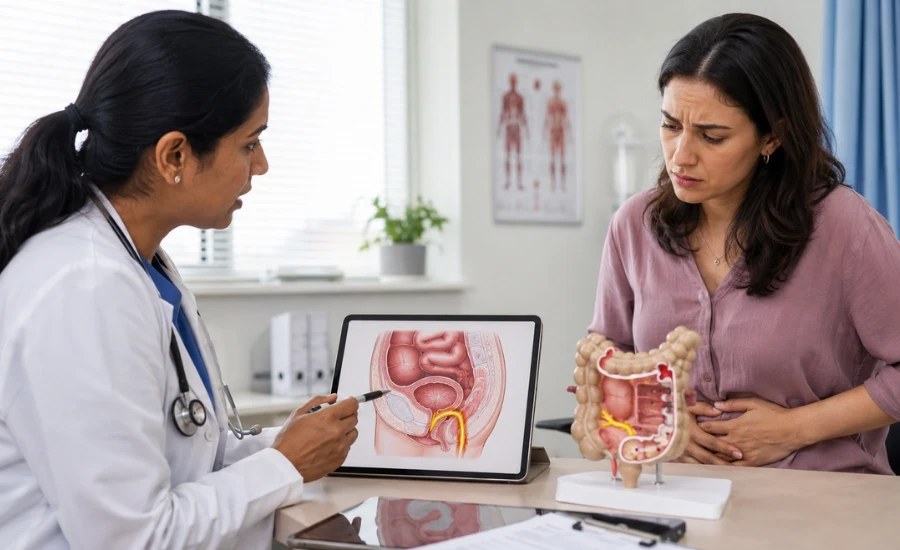
Definition One — The Medical Confusion: Fisila is a common misspelling or pronunciation variant of “fistula,” which is a real, serious medical condition. People in certain regions or with certain language backgrounds often write fistula as “fisila” based on how the word sounds when spoken. Most health-related searches for “fisila” are looking for information about fistulas.
Definition Two — The Digital Concept: A cluster of articles from early 2026 define Fisila as a modern conceptual framework for building structured, scalable digital systems. These articles describe it as a philosophy of clarity and smart integration in software or information systems. None of these articles cite a source, a founder, a paper, or a company behind the concept.
Definition Three — The Personal Name: Some name databases list Fisila as a rare given name. No confirmed language of origin is attached to it. The US Social Security Administration has no record of it being used more than five times per year. Name meaning sites assign it symbolic traits — ambition, creativity, festiveness — through letter-by-letter interpretation, which is not linguistics. It is numerology-style guessing.
Three definitions. Zero official sources. That is where the investigation starts.
The Only Real and Documented Meaning: Fistula
Skip the SEO noise for a moment. The word “fisila” as a medical search term almost certainly refers to fistula. That is the honest starting point.
A fistula is an abnormal opening or tunnel that forms between two body parts that should not be connected. The body normally keeps its internal organs separated. When infection, injury, surgery, childbirth complications, inflammation, or disease damage tissue badly enough, a channel can form between two surfaces or organs that were never meant to communicate.
This is not a minor inconvenience. It is a serious structural failure inside the body. The connection allows fluid, waste, or bacteria to flow where it should not. Depending on where the fistula forms, this can mean urine leaking through a hole into the vagina, fecal matter escaping through a passage to the skin, or two intestinal sections connecting abnormally.
Fistulas generally do not heal on their own. Most require surgical repair.
Types of Fistula: The Medical Reality
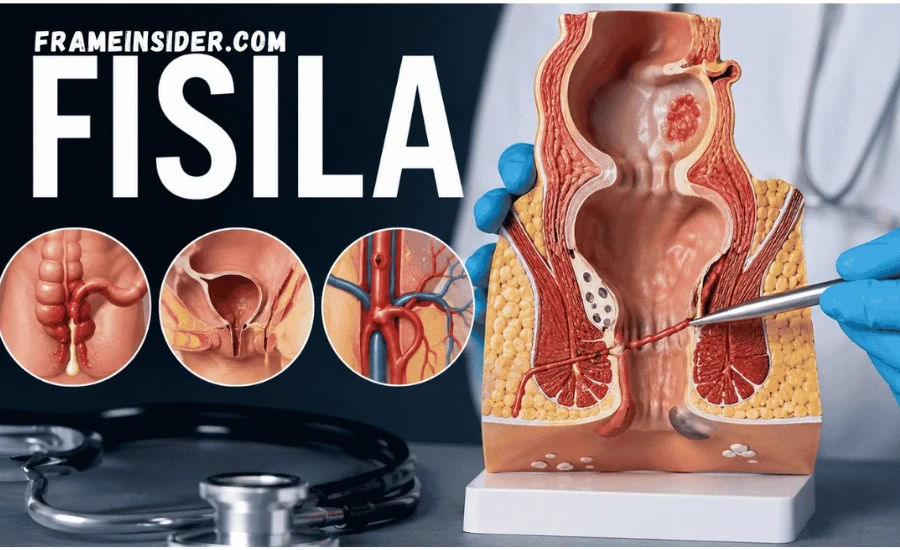
The word covers a wide range of conditions because fistulas can form between many different body parts. The location determines the symptoms, treatment complexity, and severity.
Anal fistula is one of the most common types. It usually develops after an anal abscess — an infected pocket near the anus that drains and leaves a small tunnel running from inside the anal canal to the skin outside. Symptoms include pain, swelling, redness, and persistent discharge. Surgery is the main treatment.
Vesicovaginal fistula is an opening between the bladder and vagina. It causes urinary leakage through the vagina that the person cannot control. This type is particularly common in developing countries as a result of prolonged or obstructed childbirth. It is also the type most associated with the global health crisis discussed below.
Rectovaginal fistula connects the rectum and vagina. It causes fecal matter to pass through the vaginal opening. This is among the more distressing and socially isolating complications a person can experience.
Enterocutaneous fistula connects part of the intestine to the skin surface. This often develops as a complication of surgery, Crohn’s disease, or abdominal trauma. It can allow bowel contents to drain directly through the skin.
Arteriovenous fistula involves an abnormal connection between an artery and a vein. In medical settings, this type is actually created deliberately — surgeons form an AV fistula in the arm to provide reliable access for dialysis in patients with kidney failure. But when formed unintentionally after injury or surgery, it can cause circulation problems.
What Causes a Fistula
The causes are varied but consistent across types. Infection is a leading driver — an abscess that does not resolve properly can eat through tissue and create a channel. Inflammatory bowel conditions like Crohn’s disease weaken intestinal walls and make abnormal openings more likely. Radiation therapy for cancer in the pelvic region damages tissue over time and raises fistula risk. Difficult or prolonged childbirth can tear or compress tissue enough to open a connection between the birth canal and surrounding organs. Surgical complications — where stitches fail or tissue heals abnormally — account for the majority of fistulas in high-income countries.
One clear pattern: fistulas are more common when tissue is already damaged, inflamed, or under stress. A healthy, well-vascularized tissue heals. Compromised tissue fails to close.
The Global Health Crisis Nobody Talks About Enough
Obstetric fistula — the type caused by childbirth complications — is one of the most serious unaddressed health crises for women worldwide. It is almost entirely preventable. And it disproportionately destroys the lives of women and girls in the poorest parts of the world.
Half a million women and girls across sub-Saharan Africa, Asia, the Arab States region, and Latin America are estimated to currently live with obstetric fistula. These are recent figures from UNFPA. Earlier estimates from the World Health Organization put the figure above two million, but more rigorous data collection has revised this number downward. The problem is still enormous regardless of which estimate is more accurate.
Between 50,000 and 100,000 new cases develop every year. In developing countries, 95 percent of fistulas are associated with childbirth — compared to 83 percent associated with surgery in wealthy nations. That gap tells the entire story. Access to emergency obstetric care prevents fistula. The absence of it causes fistula.
The mechanism is straightforward. When labor is prolonged and obstructed — the baby stuck for hours or days with no surgical intervention available — the pressure of the baby’s head compresses the tissue between the birth canal and the bladder or rectum. That tissue dies. A hole opens. The woman survives childbirth, often with a stillborn baby. But she now leaks urine or feces continuously, without control.
The social consequences are devastating. Many women are abandoned by husbands. Families push them out. Communities treat them as unclean or cursed. Research published in medical journals found that among women with obstetric fistula, 93 percent had a stillbirth alongside it, and 97 percent developed mental health problems including depression. Of those, 54 percent reported thinking about suicide.
This is a condition caused by the absence of a skilled birth attendant and basic surgical care. It is treatable with surgery. In skilled hands, repair rates are high. But the shortage of trained surgeons in the affected regions, combined with social stigma that prevents women from seeking care, means millions wait years or decades for treatment — if they get it at all.
There is a global shortage of over 900,000 midwives. Half of that shortage is in sub-Saharan Africa alone. That number, more than any other, explains why obstetric fistula persists.
How Fistula Is Diagnosed
Diagnosis depends on location and symptoms. For an anal fistula, a physical examination usually identifies the external opening. An MRI scan can map the exact path of the tunnel, which matters for surgical planning. For vesicovaginal or rectovaginal fistulas, a pelvic examination combined with a dye test — where a colored solution is introduced into the bladder to see if it leaks into the vaginal canal — can confirm the connection. Imaging including CT scans or MRI is used for more complex internal types.
Visual inspection alone is rarely enough for definitive diagnosis. Many fistulas are small and not immediately obvious. A provider needs to know they are looking for one.
How Fistula Is Treated
Surgery is the primary answer. The principle is the same regardless of type: close the abnormal connection, remove scar tissue, restore healthy tissue contact, and ensure the affected area heals properly this time.
Simple fistulas — small, uncomplicated, detected early — may be addressable with minimally invasive procedures. Complex or long-standing fistulas, particularly those involving significant scarring or multiple tracts, require more involved surgery. Postoperative care typically includes antibiotics to prevent infection and sometimes a period of catheterization to keep urine away from the repair site while it heals.
Success rates for fistula repair surgery are generally good in experienced hands. One study found an 89 percent success rate. But access to experienced surgeons is precisely the problem in the regions where obstetric fistula is most common.
Medications play a supporting role — reducing inflammation, treating underlying infection, or addressing conditions like Crohn’s disease that make fistula formation more likely. But medication alone cannot close an established fistula. The physical opening requires physical repair.
The “Digital Framework” Version: What Is Actually Going On
Now back to the definition that has nothing to do with medicine. A wave of content published in 2025 and 2026 describes Fisila as a modern digital concept — a framework for clarity, scalability, and structured thinking in digital systems. The articles are polished, confident, and completely empty of verifiable detail.
No company created Fisila. No researcher published a paper on it. No software tool bears this name. No technology conference featured it. There is no origin story, no founder, no working definition that holds across more than one article.
The articles use phrases like “Fisila is best understood as a conceptual framework rather than a fixed product” and “it can adapt to changing needs.” These are sentences that sound meaningful but carry no actual information. They could describe literally any idea in any field.
This pattern — vague concept, no origin, published rapidly across multiple similar-looking sites — matches content created for search engine ranking rather than genuine knowledge transfer. A low-competition keyword with enough search curiosity becomes the target. Dozens of articles appear in weeks. None of them know anything because there is nothing to know.
The Name: Real But Rare
Fisila does appear as a personal name. It is extremely uncommon. The US Social Security Administration has no record of five or more people per year bearing this name, which means it falls below their reporting threshold entirely.
No confirmed language of origin has been established. It does not appear in Swahili name databases, Fijian name databases, Arabic name records, or any South Asian naming tradition reviewed during research. Some name websites use letter-by-letter symbolic analysis to assign a “meaning” — F for festive, I for inspiring, and so on. This is not etymology. It is astrology applied to spelling.
The name is phonetically simple and distinctive. It may be a variant of other names, a coined name, or a regional adaptation of something else. Without a documented origin, anything claimed about its meaning is speculation.
What The Internet Has Done To This Word
“Fisila” is a textbook example of what happens when search engine optimization intersects with genuine public curiosity. People search the word — mostly because they are looking for “fistula” and typed it phonetically. Search engines see traffic. Content sites respond by publishing articles. The articles have no real information, so they fill space with circular definitions, vague philosophical claims, and lists of “benefits” that apply to nothing specific.
The result is a word that looks like it means something because so many articles exist about it. Search engines treat volume of content as a signal of relevance. More articles create more apparent relevance. More apparent relevance generates more articles. Nobody actually adds information to the conversation.
The only genuine substance behind any Fisila search is the medical condition. Learn about fistulas. That is the real answer most people are looking for.
You may also like Asbestlint
FAQ
1. What does Fisila mean?
It does not have one fixed meaning. Online, it appears in three distinct contexts: as a misspelling of the medical term fistula, as a vague digital concept with no confirmed origin, and as a rare personal name with no established linguistic background. None of these definitions is official or dictionary-verified.
2. Is Fisila a medical condition?
Not under this spelling. The medical condition most people are searching for when they type “Fisila” is fistula — an abnormal connection or tunnel between two body parts that should not be connected. That is a real, documented, serious condition.
3. What is a fistula?
An abnormal opening that forms between two organs, cavities, or surfaces inside the body. It can develop as a result of infection, childbirth complications, surgery, inflammatory bowel disease, radiation, or injury. It generally does not heal without medical treatment.
4. What are the most common types of fistula?
Anal fistula, vesicovaginal fistula (bladder to vagina), rectovaginal fistula (rectum to vagina), enterocutaneous fistula (intestine to skin), and arteriovenous fistula (artery to vein) are the most commonly documented types.
5. Can a fistula heal on its own?
Rarely. Most fistulas require medical intervention. Small fistulas caught very early may be managed with catheter drainage or medication, but surgery is the standard treatment for the majority of cases.
6. What is obstetric fistula and why does it matter?
Obstetric fistula forms during prolonged or obstructed childbirth when tissue between the birth canal and the bladder or rectum dies under pressure. It causes continuous, uncontrollable leakage of urine or feces. Approximately half a million women currently live with it, almost entirely in low-income countries where emergency obstetric care is unavailable. It is preventable and treatable but remains widespread due to healthcare access gaps.
7. How is fistula treated?
Surgical repair is the main treatment. The surgery closes the abnormal connection and restores the affected tissue. Success rates are high when performed by trained surgeons. Medications manage infection and underlying conditions but cannot close the opening on their own.
8. Is Fisila a real name?
It appears in some name databases but has no confirmed language of origin and is not present in US Social Security Administration records at any meaningful frequency. It may be a variant of another name or a coined name. No established meaning is attached to it.
9. Why do so many websites have articles about Fisila if it has no clear meaning?
Because “Fisila” generates search traffic — largely from people looking for “fistula” or curious about an unfamiliar term. Content sites publish articles to capture that traffic. The articles contain little real information and largely repeat the same vague claims about clarity, structure, and digital frameworks. This is a search engine optimization pattern, not genuine knowledge creation.
10. What is the digital framework definition of Fisila?
Multiple sites from 2025 and 2026 describe Fisila as a conceptual approach to building scalable and structured digital systems. No company, researcher, publication, or software tool can be linked to this definition. It appears to be content created specifically to rank in search results rather than to document a real concept.
11. Is Fisila dangerous if it refers to a fistula?
Yes. An untreated fistula can cause chronic infection, organ damage, and serious ongoing health complications. Anyone experiencing symptoms such as unusual leakage of urine or feces, persistent discharge from an opening near the anus or genitals, or recurring infections in those areas should see a doctor. Do not try home treatment.
12. Where can someone find real information about fistulas?
The Cleveland Clinic, the World Health Organization, UNFPA, and peer-reviewed medical journals are reliable sources. National health services in most countries also publish patient guidance on fistula types, symptoms, and treatment options.