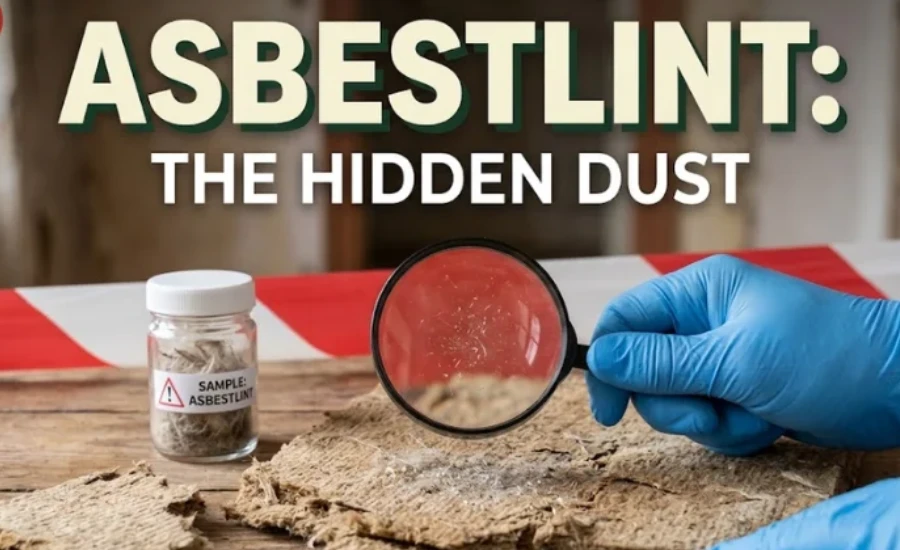
Asbestlint: Real Danger, Questionable Word, and What You Actually Need to Know
Here is the problem. Search “asbestlint” right now and you will find dozens of detailed guides. Clear headings. Safety tips. Health warnings. The word sounds technical. It sounds official. But check any scientific database, any peer-reviewed journal, any environmental health textbook — and it does not appear once. Not a single entry. The thing it describes is real and genuinely deadly. But the word itself? That is a different story entirely.
Quick Reference Table
| Factor | Detail |
|---|---|
| Term Type | Informal / Descriptive — not a scientific term |
| In Scientific Literature? | No peer-reviewed papers found using this term |
| What It Describes | Airborne fibers released from deteriorating asbestos materials |
| Also Known As | Asbestos rope, asbestos tape, asbestos woven insulation |
| Scientific Terms Used Instead | Asbestos fiber release, friable asbestos, ACM (asbestos-containing material) |
| Underlying Hazard | Real and serious — causes mesothelioma, asbestosis, lung cancer |
| Countries With Full Bans | UK (1999), European Union, Australia, Japan, and many more |
| US Status | Chrysotile asbestos banned 2024 — but other types still exist in old structures |
| Diseases Caused | Asbestosis, mesothelioma, lung cancer, pleural plaques |
| Disease Latency Period | 10 to 50 years after first exposure |
What Is Asbestlint — Two Very Different Answers
This is where things get complicated. Ask ten websites what asbestlint means, and you get two completely different answers. Nobody flags this. Both definitions appear with equal confidence across dozens of articles.
Definition One: Asbestlint is a descriptive informal term for tiny asbestos fibers that become airborne when asbestos-containing materials break down or get disturbed. The fibers float like lint — hence the name. This is a concept, not a product.
Definition Two: Asbestlint is an actual physical material — a woven or braided rope or tape made from asbestos fibers. It was used as heat-resistant insulation around pipes, boilers, and electrical systems until it was banned.
Both describe something real. But they are not the same thing. One is a phenomenon (airborne fiber release). The other is a manufactured product (woven asbestos rope). Most articles treat both as interchangeable. They are not. This confusion matters because one affects how you detect it, and the other affects how you remove it.
The scientific community uses neither definition under this word. Professionals call airborne fiber release “friable asbestos” or “asbestos fiber release.” Woven physical products are called “asbestos rope,” “asbestos tape,” or “asbestos lagging.” The word “asbestlint” appears nowhere in professional guidance from the EPA, OSHA, or the UK Health and Safety Executive.
The Physical Product: What Woven Asbestos Actually Was
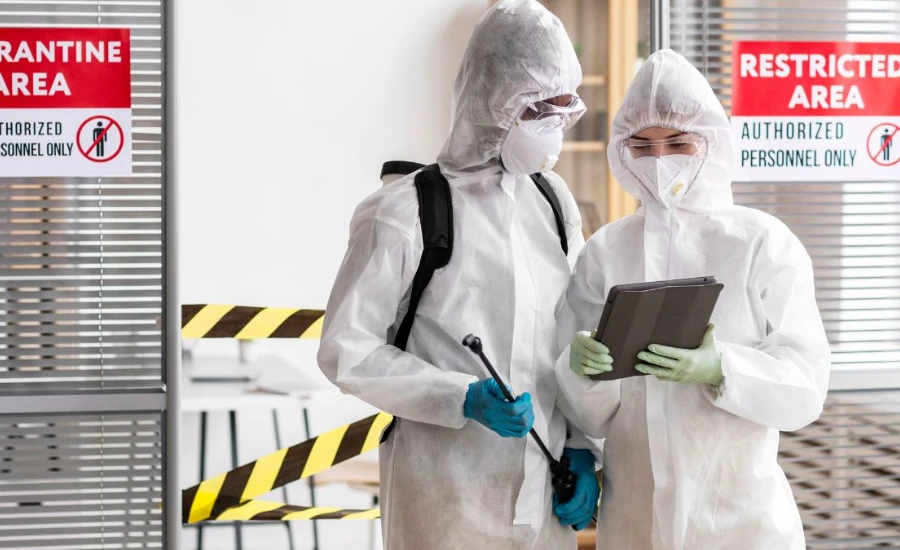
Before talking about the danger, it helps to understand what the physical product looked like and why it was used so heavily.
Asbestos rope and tape were made by weaving raw asbestos fibers together — the same way cotton or hemp can be braided into rope. The result was a soft, textile-like material that could withstand very high temperatures, often up to 600 degrees Celsius or more.That heat resistance was extraordinary. No synthetic material at the time came close.
There were generally three distinct types. Twisted asbestos rope was made by combining several fiber strands, making it dense and durable — commonly used for sealing and insulation. Square asbestos rope used fibers woven into a square cross-section, mainly for heat insulation. Asbestos lagging rope had a dual-layer design — a ceramic core with an outer layer of woven asbestos.These products were used for boiler insulation, pipe insulation, sealants in automotive and heating systems, fireproofing seals in buildings, and pump packing material to prevent leaks.This was not a niche product. It was everywhere. Shipyards. Power plants. Schools. Hospitals. Homes built before the 1980s. Any place that needed to keep heat in or fire out. Manufacturers knew it worked. For decades, that was enough.
The Airborne Threat: How Fibers Get Into the Air
Whether you are talking about the physical rope or the general concept of airborne fiber release, the danger mechanism is the same.
These fibers are extremely small, often microscopic, and can easily become airborne when disturbed.Once in the air, they do not behave like ordinary dust. Normal dust particles are heavy enough to settle fairly quickly. Asbestos fibers are different. They are so light and thin that they stay suspended in the air for hours — sometimes days — before landing.
You cannot see them. You cannot smell them. You get no warning at the time of exposure. That is what makes this hazard so uniquely dangerous. Most physical dangers announce themselves. A hot surface burns on contact. Loud noise causes immediate pain. Asbestos does none of that.
When these microscopic fibers become airborne, they can mix with dust and lint, spreading through homes, workplaces, or old buildings without being noticed.They settle into soft materials — carpets, clothing, furniture — and can be disturbed again with the slightest movement, re-entering the air.
The situations most likely to disturb these materials include renovation work, demolition, drilling into walls, removing old pipe insulation, and even just general deterioration of aging building materials over time. A building that was constructed in 1965 and never touched may still have intact asbestos materials. But the moment someone starts cutting, drilling, or pulling — the fibers go airborne.
Where It Hides
Asbestlint tends to accumulate in areas where asbestos insulation, ceiling tiles, roofing, or fireproofing materials have been disturbed or left to decay.The high-risk locations are consistent across all professional guidance:
Boiler rooms and mechanical rooms are the most common hotspot. Insulation around old boilers almost always contained asbestos. Pipe lagging — the material wrapped around hot water pipes — is another primary location. Ceiling tiles in buildings constructed before the 1980s frequently contained asbestos. Floor tiles, particularly the 9×9 inch vinyl tiles common in mid-century buildings, often tested positive. Shipyards used asbestos so extensively that workers who built ships in the 1950s, 60s, and 70s have some of the highest mesothelioma rates ever recorded.
If you see a white, woven tape wrapped around a pipe that looks like a dirty bandage and appears to be crumbling or shedding dust, you should treat it as asbestos until proven otherwise. In many cases the tape was painted over, but as the paint cracks, the fibrous texture beneath becomes visible.Important: Visual inspection alone cannot confirm asbestos. It can only raise suspicion. Only a laboratory test can confirm the presence of asbestos.Do not touch it. Do not cut it. Do not try to clean it up yourself.
What It Does to the Body
This is the part that is not disputed anywhere. The science on asbestos health effects is extensive, consistent, and goes back decades.
Once fibers enter the lungs, the body cannot remove them. They lodge permanently in lung tissue and the surrounding membrane — the mesothelium. The body tries to fight them. That fighting process causes long-term inflammation. That inflammation slowly, over years and decades, causes irreversible damage.
Three main diseases result:
Asbestosis is a chronic lung condition caused by fiber-induced scarring of lung tissue. It typically develops 10 to 40 years after exposure.The scarring makes it progressively harder to breathe. It is not curable. Treatment can slow the decline but cannot reverse the damage.
Mesothelioma is a rare and aggressive cancer that affects the lining of the lungs or abdomen. Symptoms can take 10 to 50 years to appear after initial exposure.By the time symptoms emerge — persistent cough, chest pain, shortness of breath, fluid buildup — the disease is usually at an advanced stage. Survival rates remain poor. Most patients are diagnosed over the age of 65, often decades after the original exposure.
Lung cancer risk increases significantly with asbestos exposure. It often develops 20 to 30 years after exposure, and the risk is notably higher for individuals who smoked in addition to being exposed to asbestos.The latency period is what makes this problem so insidious. A factory worker exposed in 1975 may not receive a mesothelioma diagnosis until 2015. By that time, the company responsible may no longer exist. The memory of the exposure may be faint. The connection between a workplace 40 years ago and a cancer today is not always made.
The Regulatory History: A Long and Slow Response
The story of how governments handled asbestos is not a story of swift, decisive action. It is a story of repeated delays, industry pushback, and partial measures that left millions exposed for far longer than necessary.
The EPA banned spray-applied asbestos materials used for fireproofing and insulation in 1973. In 1975, it banned certain asbestos pipe and block insulation for boilers and hot water tanks.These were specific, narrow bans — not a general prohibition.
In 1989, the EPA attempted a comprehensive ban on most asbestos products under the Toxic Substances Control Act. But the asbestos industry challenged the ban in court. In 1991, the United States Court of Appeals for the Fifth Circuit overturned most of it.That court loss set US asbestos regulation back by decades.
The UK imposed a full ban on all forms of asbestos in late 1999.Europe, Australia, and Japan followed with similar comprehensive bans.
It was not until 2024 that the United States banned chrysotile asbestos — the most common type — preventing its mining, manufacturing, importation, sale, and use.That is 35 years after the failed 1989 attempt. But this still does not cover all asbestos types, and it does nothing about the material already embedded in buildings across the country.
The Gap Between Banned and Gone
Here is what most people miss. A ban on new asbestos use does not remove the asbestos that already exists. The United States still has millions of buildings that predate the regulatory era. Old schools, hospitals, apartment blocks, factories, and government buildings contain asbestos in walls, ceilings, floors, and pipe systems.
As these buildings age, materials degrade. Asbestos rope around a boiler installed in 1960 is now over 60 years old. It may be crumbling. It may have been disturbed during past renovations. The fibers may already be present in the building’s dust and air.
Professional asbestos surveys and abatement exist for this reason. Proper removal requires sealed work areas, specialist equipment, trained contractors, and careful disposal. This is not a DIY task. Any attempt to remove asbestos-containing material without proper training and equipment creates far more risk than leaving it undisturbed.
The Term Itself: What Is Actually Going On
There are no peer-reviewed publications with “asbestlint” as a keyword, topic, or abstract mention.The word does not appear in EPA guidance, OSHA documentation, UK Health and Safety Executive publications, or any government environmental health resource found during research for this article.
Experts in materials science are clear: asbestlint is not a recognized material. It is either slang or a mistake.One source traces possible origins to factory floor slang — informal nicknames for materials that workers handled daily. That is plausible. Industrial worksites generate their own vocabulary. A term that workers used casually in the 1960s could have survived in informal usage without ever entering formal language.
The more a word appears online, the more search engines treat it as meaningful. AI tools trained on internet content sometimes pick up these terms and repeat them. That is how informal or incorrect terms gain a second life in digital content.This does not mean the underlying hazard is fake. Asbestos fiber release is real, well-documented, and genuinely dangerous. The gap is between the hazard — which is serious — and the word used to describe it — which has no scientific standing.
Who Is Most At Risk
Certain occupations carry the highest historical exposure levels. Construction workers, particularly those who worked on older buildings before the 1980s. Shipyard workers, who were surrounded by asbestos insulation. Electricians who worked with asbestos-wrapped cables. Plumbers and pipefitters who regularly handled asbestos pipe lagging. Demolition workers breaking apart old structures. Automotive mechanics who worked with asbestos-containing brake pads and gaskets.
Secondary exposure is also documented. Family members of workers who brought asbestos fibers home on their clothing have developed mesothelioma. This is one of the more disturbing findings in asbestos research — a person who never set foot in a factory can develop the disease decades later because a spouse or parent carried fibers home on work clothes.
Today the risk has shifted partly to renovation workers, homeowners undertaking DIY projects in older properties, and building managers in older commercial or institutional properties who do not know what materials are in their buildings.
What To Do If You Suspect It
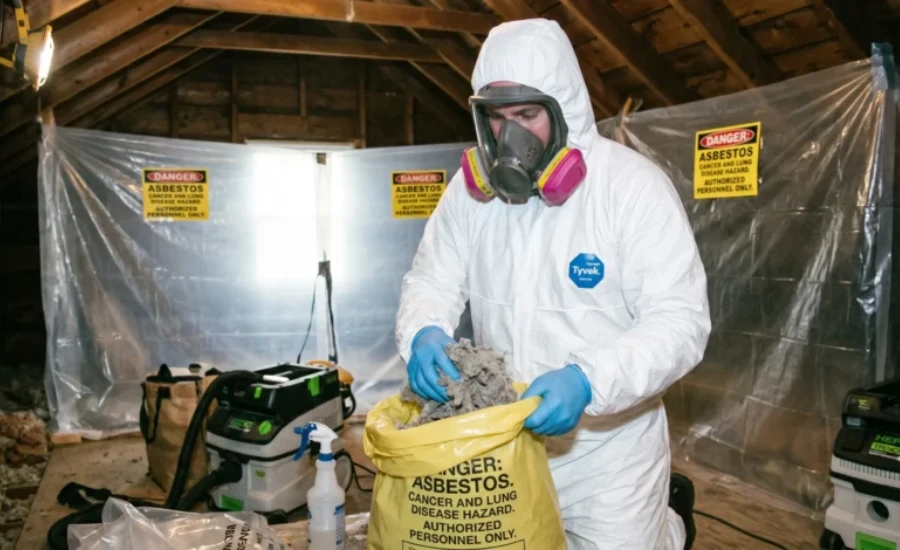
The guidance from every legitimate health and safety authority is consistent. Do not disturb it. Do not attempt to identify it visually with any certainty. Do not try to remove it yourself. Contact a licensed asbestos surveyor to assess the material. If it needs to be removed, hire a licensed asbestos abatement contractor.
If you work in a building built before 1980 and are concerned about air quality, environmental testing is available. Air sample testing can detect asbestos fiber concentrations. This is not a home test kit — it requires laboratory analysis.
If you have a history of asbestos exposure from work or a family member’s work, tell your doctor. Ask about periodic monitoring. The long latency period means that regular checkups matter, especially as you age.
You may also like Xea Myers
FAQ
1. What does asbestlint actually mean?
It is used in two ways. Some sources use it to describe airborne asbestos fibers released when old materials break down. Other sources use it to describe woven asbestos rope or tape used as industrial insulation. Both describe real things. Neither is a recognized scientific term.
2. Is asbestlint a real scientific term?
No. It does not appear in any peer-reviewed scientific literature, EPA documentation, OSHA guidance, or official environmental health resources. The underlying hazard it tries to describe — asbestos fiber release — is very real and extensively documented under correct terminology.
3. Where is asbestlint most commonly found?
Old boilers and the insulation around them, hot water pipe lagging, ceiling tiles in pre-1980s buildings, floor tiles from the mid-20th century, and wiring insulation in older electrical systems.
4. Can you see asbestlint or asbestos fibers with the naked eye?
No. Asbestos fibers are microscopic. You cannot see, smell, or taste them. There is no sensory warning when you inhale them.
5. Is all asbestos dangerous?
Yes. There is no established safe level of asbestos exposure. Chrysotile — the most common type — was banned in the US in 2024. Other types were already restricted. All types cause serious disease with sufficient exposure.
6. What diseases does asbestos exposure cause?
Asbestosis, mesothelioma, lung cancer, and pleural plaques are the main ones. All have long latency periods — symptoms may not appear for 10 to 50 years after the original exposure.
7. How long does it take for asbestos-related disease to develop?
Mesothelioma typically takes 20 to 50 years to develop after first exposure. Asbestosis can appear in 10 to 40 years. These long delays are why so many people are diagnosed long after they can identify the source of exposure.
8. Is asbestos still in buildings today?
Yes. Banning new asbestos use does not remove existing asbestos. Millions of older buildings in the US, UK, and worldwide still contain asbestos-containing materials in walls, ceilings, floors, and pipe systems.
9. Should I remove asbestos if I find it in my home?
Not yourself. Undisturbed asbestos that is in good condition is often best left alone. Disturbing it creates far greater risk than leaving it intact. If removal is necessary, hire a licensed asbestos abatement contractor.
10. Can family members of asbestos workers get sick?
Yes. Secondary exposure — from fibers carried home on work clothing — is documented and has caused mesothelioma in people who never worked with asbestos directly.
11. Who is most at risk today?
Renovation workers and contractors working in older buildings. Homeowners doing DIY work in pre-1980s properties. Anyone in regular contact with deteriorating old building materials that may contain asbestos.
12. What should I do if I think I was exposed to asbestos?
Tell your doctor about the exposure history. Ask about monitoring and periodic checkups. Early detection of asbestos-related disease improves treatment options. Do not wait for symptoms — by the time symptoms appear, the disease is often advanced.