Melissa Lynn Henning Camp: She Only Needed One Life to Change Millions
Somewhere in a hospital room in Southern California, a twenty-year-old woman with stage 3C ovarian cancer was handed news that would have hollowed out most people entirely. The cancer had spread. It had reached her liver. It was in her major organs. And the young man she’d been seeing — the one she’d pushed away and pulled back and pushed away again out of the complicated honesty of a girl who didn’t know how to be anything but real — was driving back from Indiana to see her.
She could have greeted him with fear. She could have sent him away. Instead, she told him something that has been quoted on church walls, tattoo needles, and the lips of strangers who never met her: “If just one life comes to know Jesus through what I go through, it will all be worth it.
Quick Biography
| Full Name | Melissa Lynn Henning Camp |
| Born | October 7, 1979 |
| Birthplace | Southern California, USA |
| Parents | Janette Henning (mother); stepfather Mark Henning |
| Siblings | Heather Dalton, Megan Henning, and one brother |
| Education | Attended Calvary Chapel College, Murrieta, California |
| Married | Jeremy Thomas Camp — October 21, 2000 |
| Diagnosis | Stage 3C ovarian cancer, 2000 |
| Passed Away | February 5, 2001 — age 21 |
| Buried | El Camino Memorial Park, San Diego, California |
| Legacy | Inspired the song “I Still Believe,” the memoir by Jeremy Camp, and the 2020 Lionsgate film |
Where She Came From
She grew up in Southern California in a home shaped by faith. Her mother, Janette, came out of the Jesus Movement of the 1970s — that grassroots spiritual wave that swept through American culture and left behind a generation of believers who took their Christianity personally and seriously. That’s the household Melissa grew up in. Not just church on Sundays. Faith as the actual foundation of daily life.
Janette would later describe her daughter in a way that stops you mid-sentence: “The thing I miss most is how much she loved me.” Not her smile. Not her voice. The way she loved. That kind of love doesn’t come from nowhere. It comes from watching it modeled first.
Melissa was raised alongside sisters Heather Dalton and Megan Henning, and a brother. Her mother married Mark Henning, who became the children’s stepfather and a steady presence in the family. Details about Melissa’s biological father have not been made public by her family, and that detail belongs to them alone.
The Girl She Was
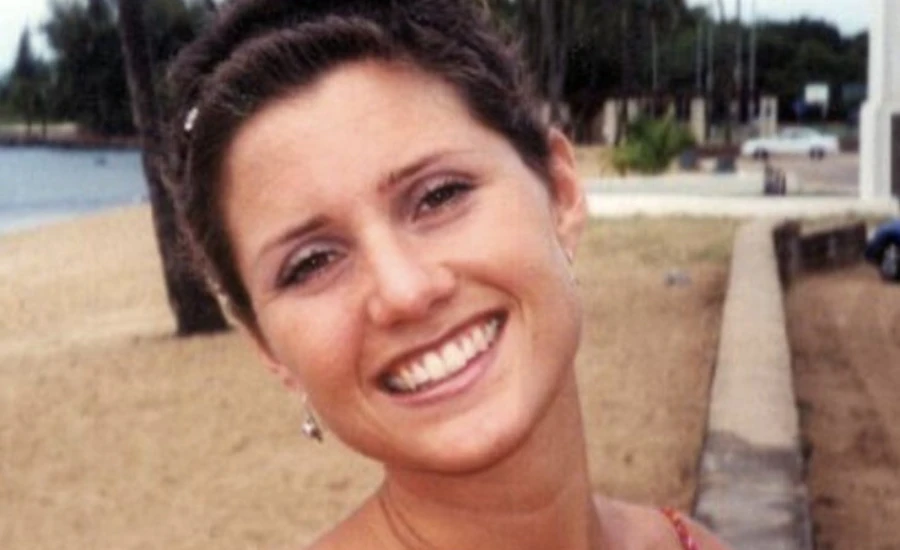
Long before the hospitals and the journals and the movie theaters, Melissa Henning was just a young woman trying to figure out who she was — and doing it with unusual intentionality.
She sang on worship teams and in choir. She played JV basketball. She led her high school youth group. She worked as a preschool teacher’s assistant and a nanny because she genuinely loved children, not as a placeholder career but as an actual calling. She was an artist and a writer, and she kept journals — not as a performance, not knowing anyone would ever read them, but because writing things down to God was how she thought.
She wrote in one entry: “I know You’ll give me the strength to endure anything that comes my way. Help me to praise You through this.” This was not written during cancer. This was before. This was just who she was — a person who prayed through difficulty before she had any idea what difficulty was actually coming.
She enrolled at Calvary Chapel College in Murrieta, California, in fall 1999. That was where she’d meet Jeremy Camp on the night he arrived at the school — at a worship service, both of them raising their hands, both of them entirely unaware of what was about to begin.
The Turning Point
Jeremy Camp later described seeing Melissa for the first time. He was playing, looked up from the stage mid-song, and there she was — hands raised, fully absorbed. He said he could tell immediately she wasn’t performing worship; she was actually in it. That was the beginning.
They started dating. Then, in the complicated emotional math of early relationships, they broke up. Then they were drawn back together as friends. Then Melissa started feeling pain in her abdomen. In the fall of 1999, doctors found what appeared to be a large ovarian cyst — volleyball-sized, successfully drained through surgery in September 1999. It came back. A second surgery was performed in May 2000. When the results came in, the news was no longer about a cyst.
Melissa was diagnosed with stage 3C ovarian cancer. She was twenty years old. The cancer had spread throughout her abdomen, reaching the liver and her major organs. Her doctors had caught it late — the way ovarian cancer typically behaves, silent and interior until it’s almost impossible to miss.
Jeremy got a phone call while home in Indiana. He drove back. He walked into her hospital room. She was glowing, according to everyone who was there — calm and full of joy and already thinking about other people. She told Jeremy exactly what she believed: that her life or her death could bring someone to Jesus, and if that happened, everything was worth it.
That sentence was not a coping mechanism. It was a conviction she’d been practicing for years.
The Cancer, the Wedding, and the Miracle
Melissa began chemotherapy. She lost her hair. Jeremy stayed. He wasn’t doing the noble, responsible thing — he was simply unable to leave, unable to imagine being anywhere else. He proposed to her at the hospital during her treatment. She said yes.
The months between diagnosis and wedding held something extraordinary. About two months before their October wedding date, Melissa had a sonogram that revealed another tumor — 4 centimeters, on her other ovary. A hysterectomy was scheduled. And then, partway through that surgery, the doctor stopped and called Janette into a room. He told her: he had opened Melissa up. There was no tumor. It was gone.
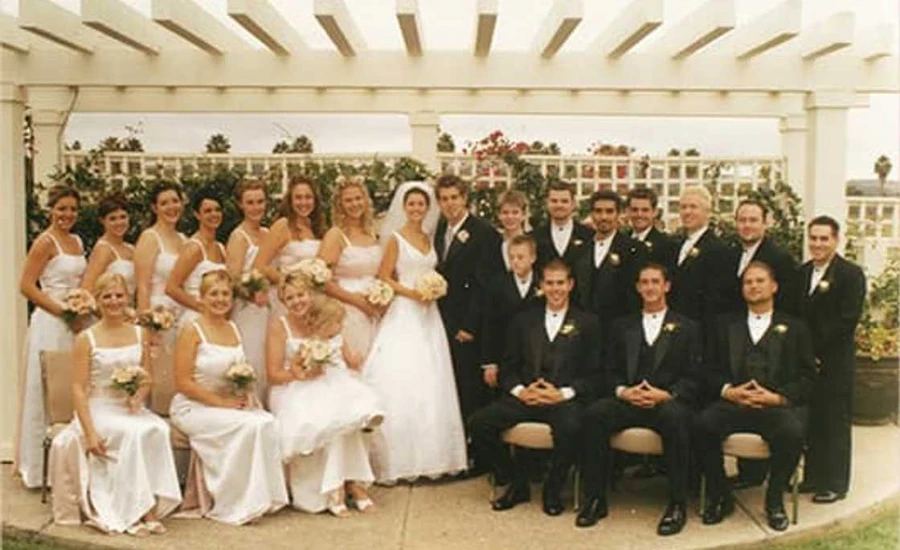
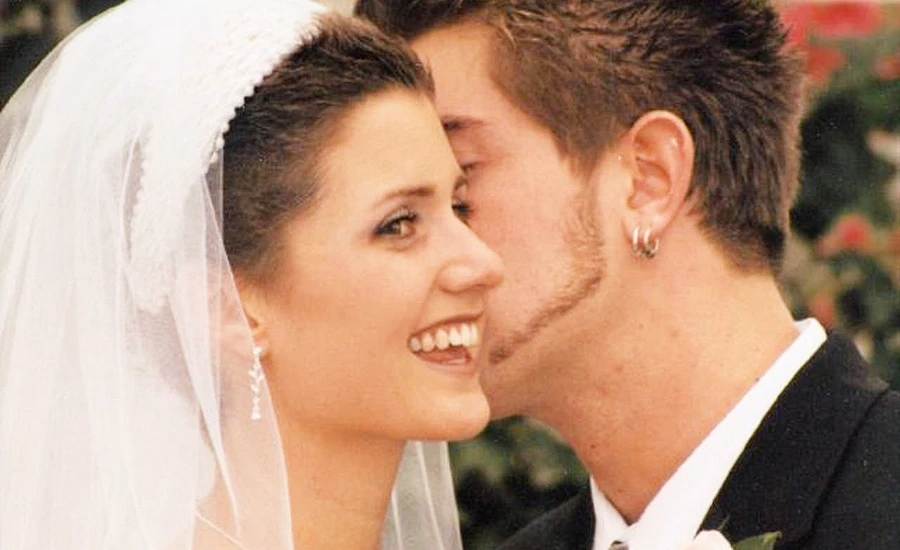
They married on October 21, 2000. Jeremy’s father, Tom Camp — a pastor — officiated. It was, by all accounts, a full, beautiful wedding. They honeymooned together, and during that honeymoon, the two of them worked together on a song about walking through uncertainty with faith intact. Jeremy was the musician; Melissa helped shape the words from her own experience. That song became “Walk by Faith.”
When they returned from the honeymoon, Melissa had stomach pain. They went to the doctor. The cancer was back — and this time, it had spread to every part of her body. There was nothing more to do medically. The doctors told her she had weeks to months to live.
She didn’t fall apart. She didn’t rage. She told people around her the same thing she’d said in the hospital room months earlier, with the same calm. Jeremy later described his own response differently — he questioned God, threw his Bible across the room at one point, yelled and grieved and fell apart in the ways a twenty-three-year-old man falls apart when the person he loves most is dying. His honesty about that is part of what made the story resonate. Melissa’s response and his response were both real, and neither one erased the other.
Melissa Lynn Henning Camp died on February 5, 2001. She was twenty-one years old. Her mother, her family, and Jeremy were with her. By all accounts, her final days were marked by the same peace she’d carried through the entire ordeal — worshipping, speaking truth, thinking about other people’s faith more than her own comfort.
She had been married for three months and fifteen days.
Jeremy wrote “I Still Believe” shortly after her funeral. He has said the song came quickly — poured out of grief and the determined, struggling faith of a young man who had lost the most important person in his life and still could not make himself stop believing in God. The song became his most well-known work, the title of his 2011 memoir, and eventually the title of a major motion picture.
She is buried at El Camino Memorial Park in San Diego, California.
The Family She Left Behind
Janette Henning, Melissa’s mother, didn’t retreat after her daughter’s death. She did the opposite. She became the keeper and narrator of Melissa’s story, collecting and publishing her daughter’s unedited journals in the book Melissa, If One Life . . ., co-authored with Melissa through the journals themselves and introduced by Jeremy Camp.
Janette has described reading her daughter’s journals as being “transported into God’s presence.” The book has reached readers across the world — there are testimonies from people in Italy who translated it for their parents, from people who say it changed how they pray, from strangers who write that they surrendered their lives to faith after reading a twenty-one-year-old’s private conversations with God.
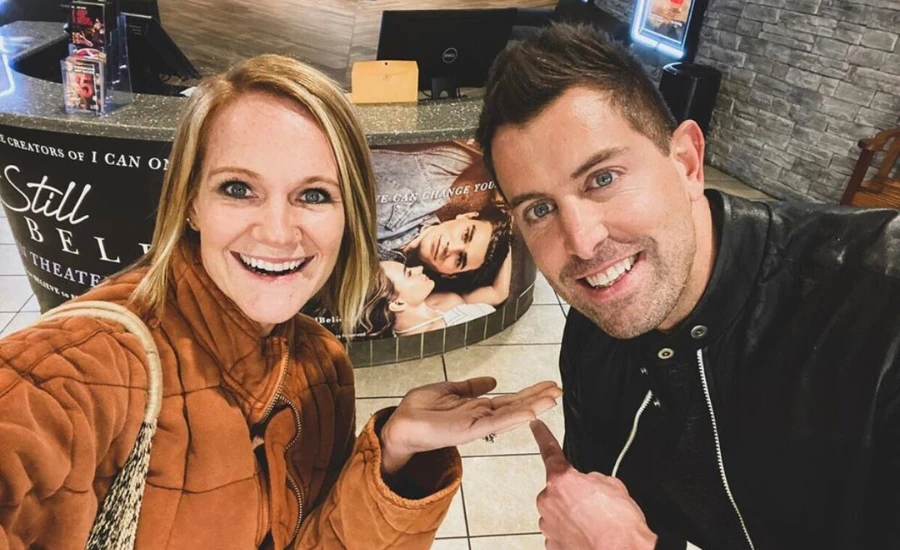
Melissa’s sister Heather Dalton has also continued to share her sister’s story publicly, speaking at events and remaining committed to keeping Melissa’s voice alive in a generation that never got to meet her. Jeremy went on — painfully, slowly, through grief that he has talked about honestly in interviews and concerts — and rebuilt. He met Adrienne Liesching, South African singer and former frontwoman of the Christian band The Benjamin Gate, in 2002 while touring. She approached him after a show and told him that Melissa’s story had changed her life. They married on December 15, 2003. They have three children together.
Adrienne was reportedly the one who pushed hardest for the film to be made, insisting that the story wasn’t only about Jeremy and Melissa — it was for anyone who had suffered.
The Movie, the Legacy, the Questions
In 2020, Lionsgate released I Still Believe, directed by the Erwin Brothers. KJ Apa played Jeremy Camp. Britt Robertson played Melissa. Gary Sinise played Jeremy’s father. Shania Twain played his mother. The film released on March 13, 2020 — six days before much of the world shut down due to COVID-19 — and still reached audiences, eventually finding wide streaming distribution.
The film received mixed critical reviews but significant audience response. Critics noted some plot conventionality; audiences — particularly Christian audiences — responded to the authenticity of the emotional core. Jeremy Camp was present for the filming of hospital scenes and has described leaving the set during one of them because it brought back memories he wasn’t prepared to carry in real time.
The film introduced Melissa to a generation that had never heard of her. And then readers went looking for the real story — for the journals, for the book, for her actual words rather than a screenplay’s interpretation of them. That’s the part that mattered most. Melissa had written for herself and for God. Those writings ended up reaching millions.
Honesty About What We Don’t Know
Melissa’s story is told primarily through the filters of faith and love — through her mother’s narration, Jeremy’s public testimony, and a film made by believers. That’s the nature of the record that exists. Her exact educational history beyond Calvary Chapel College isn’t documented publicly. Her childhood in detail is private. Her biological father’s identity has never been publicly disclosed.
There is no controversy in the conventional sense attached to Melissa’s life or death. She was a private young woman who kept journals, loved people well, and died too early. The controversies that occasionally arise around her story relate to the film — accuracy questions, cinematic compression of events — rather than to Melissa herself. The film presents the cancer going into remission before the wedding and returning after the honeymoon. That matches what has been consistently reported by Jeremy and Janette. The core facts appear solid.
What deserves naming honestly: Melissa’s story has become, over time, a ministry resource. That is both genuinely meaningful and worth acknowledging clearly. Her journals are published, marketed, and used for devotional purposes. The book, devotional journal, church campaign kit, and Bible study guides all exist around her memory. Her mother has been transparent about this. Janette has said plainly that her aim is to introduce one more life to Jesus through Melissa’s story — which is precisely what Melissa herself said she wanted. It’s consistent. It’s also worth readers knowing they’re encountering a story that has been shaped by those purposes.
What She Left
Here is what is verifiably true: a twenty-one-year-old woman’s private journals have been read by people on every inhabited continent. A song written in grief at the end of her brief life has charted on Christian radio for two decades. A film based on her love story opened in IMAX theaters. Her mother is still writing about her. Her sister is still speaking about her. The man who loved her still mentions her name at concerts.
Melissa Lynn Henning Camp lived twenty-one years and three months. She never released an album, never had children, never spoke on a stage, never held a public platform of any kind. She wrote in her journal things like “Big or small, I’m willing for it all.” She prayed to be known as a woman completely in love with God. She told a boy in a hospital room that her suffering was worth it if even one life changed because of it.
One life became millions.
You may also like What happened to Owen Wilson’s Nose
FAQ: Melissa Lynn Henning Camp
1. Who was Melissa Lynn Henning Camp?
Melissa was the first wife of Christian singer Jeremy Camp. She was a young woman of faith, a journal writer, a youth leader, and a college student who died from ovarian cancer on February 5, 2001, at the age of twenty-one, three and a half months after her wedding.
2. What type of cancer did Melissa Henning Camp have?
She was diagnosed with stage 3C ovarian cancer in 2000. By the time it was discovered, it had spread throughout her abdomen and reached her liver and major organs.
3. How long were Jeremy Camp and Melissa married before she died?
Approximately three months and fifteen days. They married on October 21, 2000, and Melissa died on February 5, 2001.
4. What was Melissa Henning Camp’s famous quote?
She is most remembered for saying: “If just one life comes to know Jesus through what I go through, it will all be worth it.” She said a version of this multiple times during her illness, including to Jeremy when he came to visit her in the hospital after her diagnosis.
5. Did Melissa’s cancer go into remission before the wedding?
Yes. According to the account told by Jeremy and Janette Henning, approximately two months before the wedding, a scan revealed a new tumor. A surgery was scheduled, but during the procedure, the doctors found no tumor. The wedding proceeded. Cancer returned after the honeymoon with a final, rapid spread.
6. What is the book Melissa, If One Life?
It is a book compiled from Melissa’s personal journals, narrated and contextualized by her mother, Janette Henning. Jeremy Camp wrote the foreword. The book contains Melissa’s unedited journal entries and tells the full story of her faith, her relationship with Jeremy, and her battle with cancer.
7. What is the movie I Still Believe?
It is a 2020 Lionsgate biographical drama directed by the Erwin Brothers. KJ Apa plays Jeremy Camp and Britt Robertson plays Melissa. Gary Sinise and Shania Twain co-star. The film is based on Jeremy Camp’s 2011 memoir of the same name.
8. Where is Melissa Lynn Henning Camp buried?
She is buried at El Camino Memorial Park in San Diego, California.
9. How did Jeremy Camp respond to Melissa’s death?
By his own account, with deep grief, anger, and crisis of faith — he has described throwing his Bible, questioning God, and falling apart before eventually finding his way back to belief. His song “I Still Believe” captures that arc honestly.
10. How did Jeremy Camp write “I Still Believe”?
He wrote it shortly after Melissa’s funeral. He has described it coming quickly — pouring out of his grief as an expression of struggling faith rather than easy faith. It became his defining song and the name of both his memoir and the film.
11. Who is Janette Henning?
She is Melissa’s mother — a pastor’s wife, writer, women’s minister, and the narrator of Melissa, If One Life. She has spent the years since Melissa’s death actively sharing her daughter’s story and journals. She lives in Encinitas, California, with her husband Mark.
12. Did Jeremy Camp remarry after Melissa’s death?
Yes. He married Adrienne Liesching, a South African singer and former frontwoman of the band The Benjamin Gate, on December 15, 2003. They have three children together. Adrienne has been openly supportive of preserving Melissa’s memory and encouraged the making of the film.
13. What was the song “Walk by Faith” about?
Jeremy and Melissa worked on it together during their honeymoon. The song reflects walking through uncertainty — what Melissa described as a “broken road” — with faith rather than sight. It was one of the first songs Jeremy performed publicly after her death.
14. How accurate is the I Still Believe film compared to the real story?
Jeremy Camp was closely involved with the production and has confirmed the major events are accurately represented. Some details were adjusted for cinematic flow, as is standard for biographical films. The hospital scene of Jeremy throwing his Bible, for example, is directly from his own account.
15. What is Melissa Lynn Henning Camp’s legacy?
Her journals have been read globally, her love story inspired a widely distributed film, and her words — particularly about suffering and faith — continue to circulate among people who have never watched the movie or read the book. She asked to impact one life. By any measure, she has impacted millions.