Severna Dakota: What It Actually Is, Why AI Content Farms Are Writing Fake History About It, and What North Dakota Really Looks Like
The answer to “what is Severna Dakota” is simple and takes four words: it is North Dakota.
“Severna Dakota” is the South Slavic translation of “North Dakota” — the name used in Slovenian, Croatian, Bosnian, and Serbian for the 39th state of the United States. “Severna” means “northern” in those languages. “Dakota” comes from the Lakota Sioux word meaning “allies” or “friends.” Put them together and you have the regional language translation of a state name that English speakers know as North Dakota.
The first search result for “Severna Dakota” is the Slovenian Wikipedia article for North Dakota. That is the correct, primary, authoritative result. Everything else requires examination.
The Two Things You Will Find When You Search “Severna Dakota”
The Real Thing: North Dakota in South Slavic Languages
For speakers of Slovenian, Croatian, Bosnian, Serbian, and related South Slavic languages, “Severna Dakota” is simply the standard way to write North Dakota. It is not a mystery term. It is not an emerging concept. It is geography.
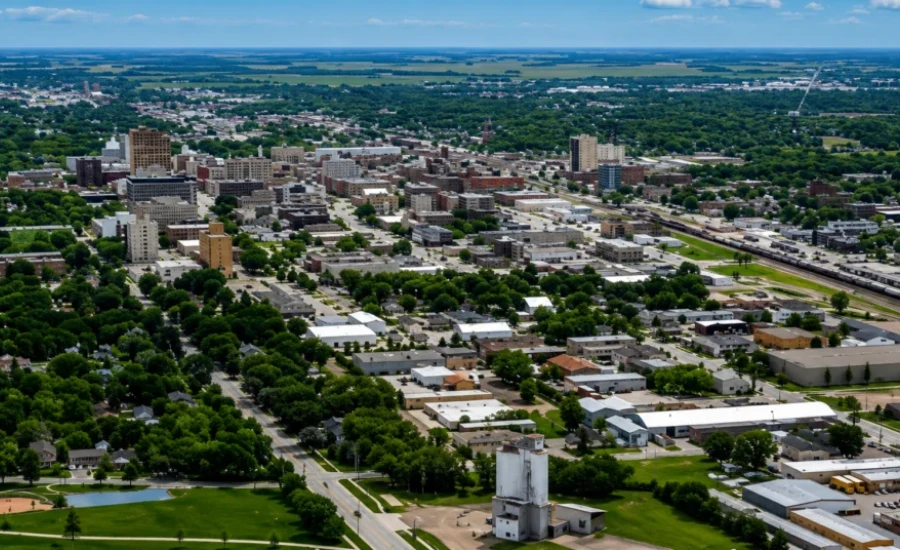
North Dakota is the 19th largest U.S. state by area. It borders Canada to the north — specifically the Canadian provinces of Saskatchewan and Manitoba. It borders Minnesota to the east, South Dakota to the south, and Montana to the west. Its capital is Bismarck. Its largest city is Fargo. Its population is under 800,000, making it the fourth least populated state in America.
That is what Severna Dakota is. The state exists. The translation is accurate. The Slovenian Wikipedia article is comprehensive and correct.
The Fake Thing: AI Content Farm Articles
A second category of search results about “Severna Dakota” consists of AI-generated SEO content articles that treat the phrase as if it refers to a mysterious specific place or concept requiring explanation. These articles have several tells.
One site describes “Severna Dakota” as “a hidden gem in the heart of America.” North Dakota is not hidden. It is a U.S. state that has been in geography textbooks since 1889.
Another site says “Severna Dakota played a subtle yet significant role during the American Revolution. While not a front-line battleground, it served as a strategic location for communication and supply routes.” North Dakota did not exist during the American Revolution. The American Revolution ended in 1783. North Dakota did not become a state until November 2, 1889 — more than a hundred years later. The territory that is now North Dakota was not part of the original thirteen colonies, was not strategically used in the Revolution, and was not even part of the United States until the Louisiana Purchase of 1803.
A third site describes it as “a vibrant blend of tradition and modernity” and a tourist destination with “endless possibilities.” This is generic travel content generated about a search term without any specific knowledge of the actual place.
These articles are the same AI-generated SEO phenomenon documented in the Caricatronchi and fxghxt articles in this series. A foreign-language translation of an American state name — “Severna Dakota” — registers as an uncontested English-language keyword. Content farms generate articles about it. The articles appear in search results alongside genuine translated content. Readers searching the term find a mix of accurate translation content and fabricated AI content indistinguishable in format.
North Dakota: What Is Actually True
Since “Severna Dakota” is North Dakota, the honest article about it covers what North Dakota actually is.
Bio at a Glance
| Detail | Info |
|---|---|
| Name in English | North Dakota |
| Name in South Slavic languages | Severna Dakota |
| Statehood | November 2, 1889 — 39th state admitted |
| Capital | Bismarck |
| Largest city | Fargo |
| Population | Approximately 780,000 (2020 census) — 4th least populated state |
| Area | 70,698 square miles — 19th largest state |
| Borders | Canada (north), Minnesota (east), South Dakota (south), Montana (west) |
| Region | Great Plains |
| Major rivers | Missouri River, Red River of the North |
| Nickname | Peace Garden State, Flickertail State, Roughrider State |
| State bird | Western meadowlark |
| Native peoples | Mandan, Hidatsa, Arikara (Missouri River); Ojibwe, Cree (northeast); Lakota, Dakota, Nakota Sioux |
| Primary industries | Agriculture (wheat, sunflowers, canola), oil and gas (Bakken formation), technology |
| Major universities | University of North Dakota (Grand Forks), North Dakota State University (Fargo) |
| Famous residents | Roger Maris (baseball), Lawrence Welk (musician), Angie Dickinson (actress), Phil Jackson (basketball coach) |
| Key historical fact | Part of the Louisiana Purchase, 1803 — organized as Dakota Territory 1861 — split into North and South Dakota 1889 |
The History the AI Articles Got Wrong
The AI content farm article claiming “Severna Dakota played a role in the American Revolution” deserves specific correction because it is so thoroughly wrong.
The American Revolution ran from 1775 to 1783. The region that is now North Dakota was at that time inhabited by the Mandan, Hidatsa, Arikara, and various Sioux peoples. No American colonists lived there. No British forces operated there. No supply routes ran through it. The nearest Revolutionary War activity was hundreds of miles to the east in the original thirteen colonies.
North Dakota’s connection to American history begins differently and at a different time. Key documented historical facts:
The region entered American consciousness through the Lewis and Clark Expedition of 1804–1806 — which wintered at Fort Mandan near present-day Washburn, North Dakota, and was where Sacagawea and her husband Toussaint Charbonneau joined the Corps of Discovery.
The Dakota Territory was formally organized in 1861 — the year the Civil War began. This is important context. The territory was being opened to American settlement at the same time the country was tearing itself apart over slavery — a tension with direct implications for how Native peoples in the region were treated by an unstable and violent federal government.
The Dakota War of 1862 was fought in neighboring Minnesota but created waves of fear and military aggression that directly affected Native peoples throughout the Dakota Territory.
The Dakota Boom of 1878 to 1886 brought large-scale farming — particularly wheat — to the prairies through the Homestead Act. Giant bonanza farms emerged. The Northern Pacific and Great Northern railroads competed for access to lucrative grain markets.
On November 2, 1889, President Grover Cleveland signed the proclamations admitting both North Dakota and South Dakota as states simultaneously. He shuffled the papers so that neither state could definitively claim to have been admitted before the other.
The 20th century brought oil. The Williston Basin and the Bakken Formation beneath northwestern North Dakota became one of the most significant oil discoveries in American history — fueling a major economic boom beginning in the early 2000s and reaching a peak around 2012–2014 before oil prices dropped.
The Native Nations the AI Articles Glossed Over
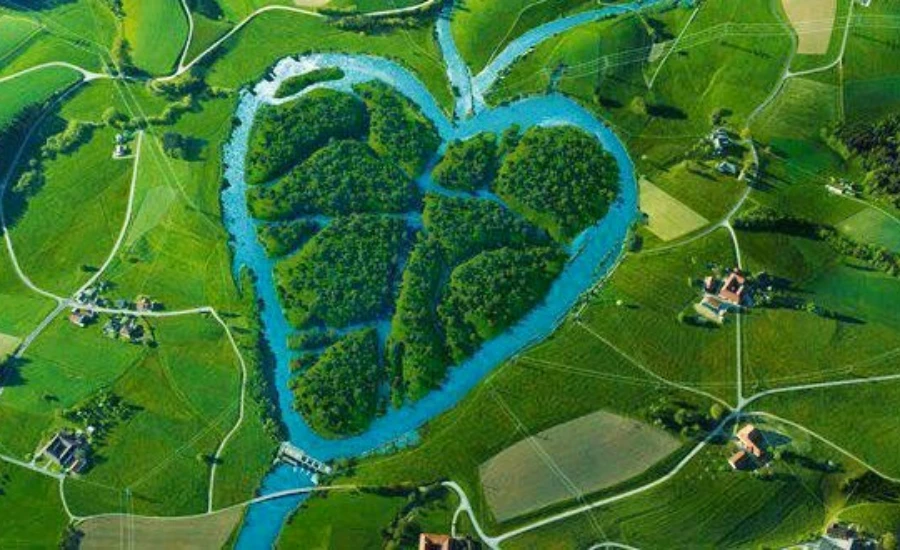
Every AI-generated article about “Severna Dakota” mentions Native Americans in a single paragraph as historical background — “Indigenous peoples who shaped the land” — and then moves on. This is inadequate to the point of being misleading.
North Dakota is home to five federally recognized tribal nations:
The Standing Rock Sioux Tribe — whose reservation straddles the North Dakota-South Dakota border and whose people are among the descendants of those who defeated George Armstrong Custer at Little Bighorn in 1876. The Standing Rock Sioux became internationally known in 2016 when the Dakota Access Pipeline protests drew global attention to the intersection of tribal sovereignty, environmental protection, and federal policy.
The Three Affiliated Tribes — the Mandan, Hidatsa, and Arikara Nation, whose reservation is the Fort Berthold Reservation in northwestern North Dakota. These are the peoples whose permanent villages along the Missouri River hosted Lewis and Clark in 1804. The construction of Garrison Dam in 1953 flooded the most fertile bottomlands of their reservation — a displacement whose consequences continue to the present day.
The Spirit Lake Nation — Dakota Sioux people on a reservation in northeastern North Dakota.
The Turtle Mountain Band of Chippewa — Ojibwe people whose reservation is in the northern edge of the state near the Canadian border.
The Sisseton-Wahpeton Oyate — whose Lake Traverse Reservation straddles the North Dakota-South Dakota border in the east.
These nations have maintained cultural practices, languages, and governmental structures through extraordinary historical pressure. The word “Dakota” in the state’s name comes from the language of Sioux peoples who called themselves Dakota, Lakota, and Nakota. The state is literally named after the people who were displaced to make room for it.
That is not a tapestry. That is a specific and documented history worth stating plainly.
The Economy Nobody Outside North Dakota Talks About
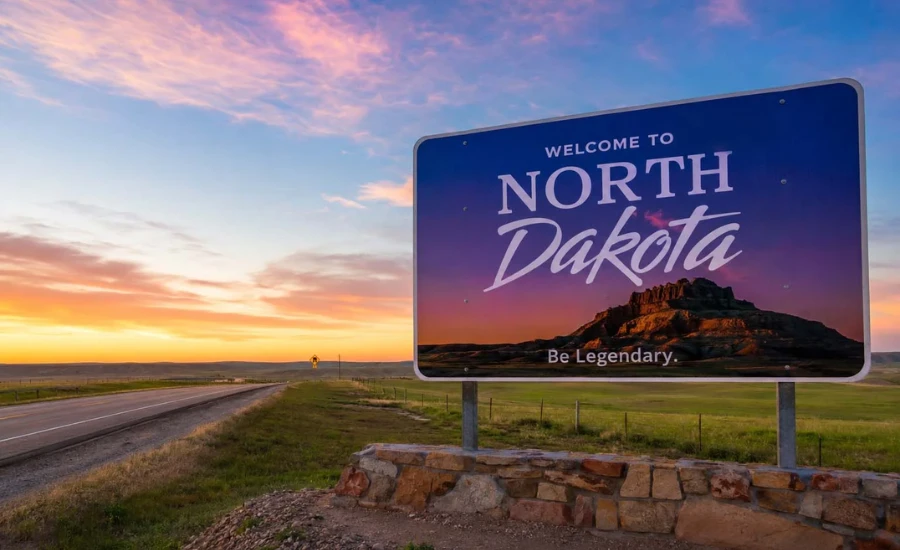
North Dakota is regularly ranked as one of the most economically stable states in America — with unemployment rates consistently among the lowest in the country. Three industries drive this.
Agriculture has defined the state since the 1880s. North Dakota leads the United States in production of several crops including durum wheat, spring wheat, sunflowers, canola, flaxseed, and dry edible peas. It is second in the country for honey production. The flat Red River Valley in the east is one of the most productive agricultural regions in North America.
Oil and gas production from the Bakken Formation transformed the state’s economy after horizontal drilling and hydraulic fracturing made previously inaccessible oil economically viable in the early 2000s. At its peak around 2012, North Dakota briefly became the second-largest oil-producing state in America after Texas. The oil boom created a labor shortage so severe that workers from across the country moved to western North Dakota for roughneck jobs paying six-figure salaries.
Technology and financial services have grown significantly in the 21st century. Fargo in particular has developed a technology sector that includes financial technology companies, software firms, and remote work infrastructure.
What the Fake Articles Get Consistently Wrong
“Severna Dakota played a role in the American Revolution” — as established above, this is impossible. The region did not exist as American territory during the Revolution. This error is so fundamental it suggests the content was generated by an AI that searched for “history of North Dakota” and assembled facts without chronological verification.
“Severna Dakota is a hidden gem” — North Dakota is a U.S. state. It is the size of the state of Ohio. It is on every American map, in every American atlas, and in every American geography textbook. It is not hidden. It is simply not heavily touristed.
“Nestled in the heart of North Dakota” — several articles describe “Severna Dakota” as being located “in the heart of North Dakota.” Severna Dakota is North Dakota. Something cannot be nestled in the heart of itself.
“The town was named after local landowners” — one article begins describing a town origin story. There is no “town” of Severna Dakota. It is a state. The word “Severna Dakota” is a translation, not a place name that was specifically chosen or named after anyone.
Where North Dakota Stands in 2026
North Dakota in 2026 is navigating the transition away from peak oil production while maintaining agricultural dominance and growing its technology sector. Fargo continues to be one of the fastest-growing mid-sized cities in America. The Standing Rock and Fort Berthold reservations continue to navigate the balance between tribal sovereignty and energy development on their lands.
The state’s population is growing modestly — primarily in Fargo and Bismarck — while rural areas face the long-term demographic challenges that affect much of rural America.
The Native nations of North Dakota continue to advocate for treaty rights, language preservation, and economic development on their own terms — with varying degrees of success depending on federal policy direction.
That is the honest, current picture of what “Severna Dakota” — North Dakota — actually is in 2026.
Final Words
Severna Dakota is North Dakota. The translation is accurate. The state is real. Its history is documented and specific. Its Native peoples are present and documented.
What is not real is the category of AI-generated articles that treat “Severna Dakota” as a mysterious emerging concept, a hidden tourist gem, or a place that played a role in the American Revolution a century before it existed.
The honest article about Severna Dakota covers North Dakota — its geography, its actual history, its Native nations, its economy, and its present. That is what this article has done.
For speakers of South Slavic languages reading about their own state: the Slovenian Wikipedia article is accurate and detailed. It is the right place to start.
For everyone else: North Dakota exists, is interesting, and does not need fake history or fabricated mystery to be worth writing about.
You may also like Fxghxt
FAQ: 12 Real Questions About Severna Dakota
1. What does Severna Dakota mean?
It is the South Slavic translation of “North Dakota.” “Severna” means “northern” in Slovenian, Croatian, Bosnian, and Serbian. “Dakota” is the Lakota Sioux word for “allies” or “friends.” Together they translate precisely to North Dakota — the 39th state of the United States, admitted on November 2, 1889.
2. Is Severna Dakota a separate place from North Dakota?
No. They are the same place. “Severna Dakota” is simply what North Dakota is called in South Slavic languages. There is no location called “Severna Dakota” that is distinct from or separate to the U.S. state of North Dakota.
3. Did Severna Dakota play a role in the American Revolution?
No. The American Revolution ended in 1783. The region that is now North Dakota was not part of the United States at that time — it was not acquired until the Louisiana Purchase of 1803 and was not organized as a U.S. territory until 1861. No Revolutionary War activity occurred in what is now North Dakota. Articles making this claim are AI-generated content with no factual basis.
4. What is the capital of North Dakota (Severna Dakota)?
Bismarck — named after the German chancellor Otto von Bismarck to attract German investment in the Northern Pacific Railroad when the city was founded in 1872. The largest city is Fargo, located on the Red River of the North on the Minnesota border.
5. What Native nations live in North Dakota?
Five federally recognized tribal nations: the Standing Rock Sioux Tribe, the Three Affiliated Tribes (Mandan, Hidatsa, and Arikara Nation) at Fort Berthold, the Spirit Lake Nation, the Turtle Mountain Band of Chippewa, and the Sisseton-Wahpeton Oyate. The word “Dakota” in the state’s name comes from the Sioux peoples whose lands the state occupies.
6. When did North Dakota become a state?
November 2, 1889 — the same day as South Dakota. President Grover Cleveland signed both proclamations simultaneously and shuffled the papers so neither state could claim to have been admitted first. They were carved from the Dakota Territory, which had been organized in 1861.
7. What is North Dakota’s economy based on?
Three primary industries: agriculture — particularly wheat, sunflowers, canola, and flaxseed, where North Dakota leads national production in multiple categories; oil and gas from the Bakken Formation in the western part of the state; and a growing technology and financial services sector centered in Fargo.
8. What happened at Standing Rock?
In 2016, the Standing Rock Sioux Tribe and allies from Native nations across North America gathered at the Standing Rock Reservation to protest the Dakota Access Pipeline — an oil pipeline whose route threatened the tribe’s water supply and passed through culturally significant land. The protest drew global attention, was ultimately dispersed by law enforcement, and the pipeline was built — though legal battles over its status have continued.
9. What is the connection between Lewis and Clark and North Dakota?
The Lewis and Clark Expedition wintered at Fort Mandan — near present-day Washburn, North Dakota — in 1804–1805. It was there that they met Sacagawea, the Shoshone woman who became one of their most important guides, and her husband Toussaint Charbonneau. The Corps of Discovery’s journals from Fort Mandan are among the most detailed early American accounts of the northern Great Plains.
10. Why do AI content farms write about Severna Dakota?
Because “Severna Dakota” registers as an uncontested English-language keyword — something that sounds like a topic but does not yet have dominant English-language content competing for the search result. AI content systems generate articles about any searchable string to rank in search engines. The resulting articles are not about a real topic — they are about filling a search engine gap.
11. Is North Dakota actually worth visiting?
Yes — though it receives far less tourism attention than neighboring states. Theodore Roosevelt National Park in the western Badlands is legitimately spectacular. The International Peace Garden on the Canada-North Dakota border is unique. The Knife River Indian Villages National Historic Site preserves Mandan earth lodge villages. The state’s Native cultural centers and powwows offer genuine engagement with living Indigenous traditions. Fargo has developed a real arts and restaurant scene.
12. What is the most important thing to know about North Dakota that the AI articles missed?
That Native peoples are not historical background — they are present. The five tribal nations of North Dakota have living communities, functioning governments, and ongoing relationships with the land that predate European contact by thousands of years. The word “Dakota” in the state’s name is their word. Writing about North Dakota without centering this fact produces exactly the kind of shallow, historically inaccurate content the AI farm articles generate.