Caricatronchi: What It Actually Is, Why Every Website Contradicts Every Other Website, and Why That Is the Real Story
Search “Caricatronchi” and you will find dozens of articles. Each one is confident. Each one is detailed. And they contradict each other so thoroughly that you finish reading them more confused than when you started.
One site says it is an ancient Italian woodcarving tradition going back to Etruscan times. Another says it is a modern digital art style that first appeared in mid-2024. A third says it is a fusion of caricature and Italian comic art called fumetti. A fourth says it emerged from internet slang in online communities. A fifth site — which literally has the domain name caricatronchi.com — says it has its origins in caricature art from the late 19th century.
Five different origins. Five different definitions. Zero verifiable primary sources.
Here is the honest article about Caricatronchi — including what it might actually be, what the evidence actually shows, and why the story of how it became a search topic is more interesting than most of the sites covering it have bothered to notice.
What the Word Actually Means Linguistically
Before anything else — the word itself.
“Caricatronchi” is an Italian-derived compound. Every source agrees on the components even when they disagree on everything else.
“Carica” or “caricatura” comes from the Italian verb “caricare” — to load, to charge, to exaggerate. Caricature in English derives from the same root. It means an exaggerated artistic rendering.
“Tronchi” is the plural of “tronco” in Italian. It means trunks, torsos, logs, or stumps. Depending on context it can mean tree trunks or the torso of a body.
Put them together and you get something like “exaggerated torsos” or “caricatures of trunks.” The combination is linguistically real — it is grammatically Italian. It is not, however, a word that appears in any standard Italian dictionary. It is not a term recognized by the Accademia della Crusca — the official institution that documents the Italian language. It is not in Treccani, Italy’s most comprehensive encyclopedia.
The word exists. What it refers to is genuinely disputed.
The Four Different Things People Call Caricatronchi
Definition One: Traditional Italian Woodcarving
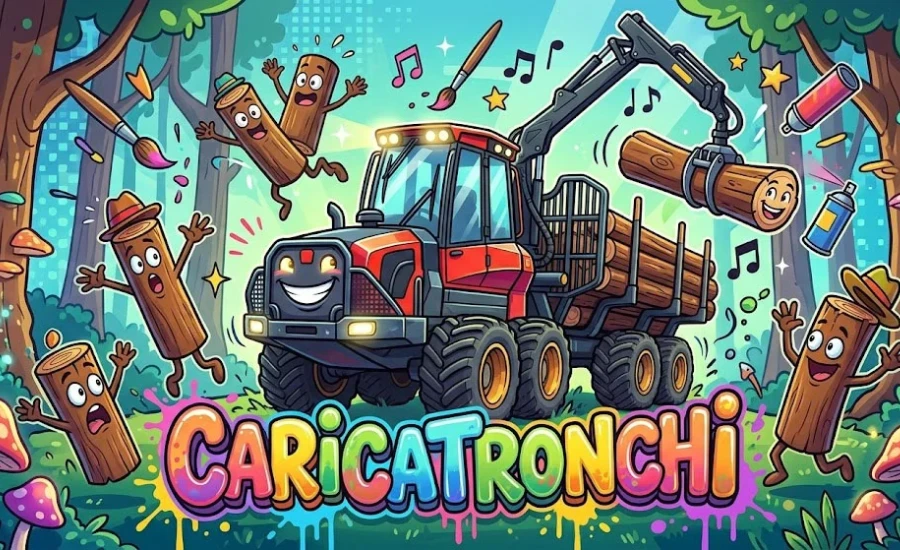
The most specific and most grounded definition comes from cedarmi.com, published June 2025. This article defines Caricatronchi as the Italian folk art practice of carving exaggerated, humorous figures from tree trunks and large wooden blocks. The Italian words support this — “caricare” for exaggeration plus “tronco” for log or trunk literally describes the activity of carving exaggerated figures from wood.
This definition is internally consistent. It is linguistically coherent. It connects to documented Italian folk art traditions. The article mentions contemporary sculptors Bruno Walpoth and Gehard Demetz as artists who draw inspiration from the tradition. Both are real, documented Austrian-Italian sculptors known for figurative woodcarving.
What this article does not provide: any historical document, museum catalogue, art history textbook, or Italian cultural institution that uses the word “Caricatronchi” to describe this practice. The carved figures tradition is real. The specific label “Caricatronchi” applied to it is not confirmed by any verifiable primary source.
Definition Two: Traditional Italian Caricature and Comic Art
Multiple sites — including bestoftci.com and letrasyletras.com — describe Caricatronchi as a hybrid of Italian caricature and comic art. These sites trace its history from Leonardo da Vinci’s grotesque sketches through Renaissance festival art, political satire prints of the 18th and 19th centuries, and modern Italian cartooning traditions.
This definition links the word to “fumetti” — the Italian word for comics, literally meaning “little puffs of smoke” from speech bubbles. The combination of caricature exaggeration with comic storytelling tradition creates a plausible art form concept.
These articles are confident and detailed. They describe street festivals, political satire prints, Commedia dell’arte performers, and digital adaptations. They read like genuine art history.
What they do not provide: any Italian art history textbook, museum catalogue, art critic’s essay, or academic paper that uses the word “Caricatronchi” to describe this tradition. The caricature tradition in Italy is extensively documented. The specific word “Caricatronchi” applied to it as a named tradition is not confirmed by any verifiable primary source.
Definition Three: A New Digital Art Style From 2024
Two sources take a completely different approach. Livemag.org.uk specifically states that “the earliest references to the specific label ‘Caricatronchi’ began appearing in mid-2024 and proliferated through 2025 across niche art blogs and personal artist sites.”
This is the most honest chronological statement about the term that appears anywhere in the research. It places the word’s documented appearance in a specific recent time period — mid-2024 — rather than tracing it back centuries.
The same article describes Caricatronchi as a contemporary digital art style that uses AI tools, generative models, and mobile illustration apps to create distorted, exaggerated portraits with 21st-century aesthetics.
Perusemagazine.com similarly describes it as a modern style that filters Italian caricature traditions through digital sketching techniques.
Under this definition, Caricatronchi is not a traditional art form with centuries of history. It is a recently coined label for a digital art aesthetic that emerged alongside AI art tools.
Definition Four: An Internet Slang Term or Digital Cultural Phenomenon
Inbloghub.com describes Caricatronchi as an “internet-born phrase” from digital communities — a term that emerged from a fusion of Italian art tradition and “playful net slang.” Prograse.com similarly approaches it as a term that emerged from the need to label new experiences in digital communication.
Under this definition, Caricatronchi is neither a historical art tradition nor a new visual style — it is a piece of internet vocabulary that emerged from online creative communities.
The Core Problem: These Four Definitions Cannot All Be True
Here is the logical issue.
A word cannot simultaneously be an ancient Italian woodcarving tradition going back to Etruscan times AND a modern digital art style that first appeared in mid-2024 AND an internet slang term from online communities AND a centuries-old caricature tradition dating to Leonardo da Vinci.
At least three of these four definitions are wrong, or all four are partially wrong. The word cannot have four fundamentally different origins and meanings without someone, somewhere, being able to provide a primary source that settles the question.
No such primary source appears in any of the articles about Caricatronchi. Every site that covers it cites other websites. None cites an art history book. None cites an Italian cultural institution. None cites a museum catalogue. None cites a linguistic database. None cites a dated primary document that confirms the word existed before 2024.
What Is Actually Happening Here: The SEO Content Problem
The livemag.org.uk statement that the term first appeared in mid-2024 is the key to understanding the rest.
“Caricatronchi” appears to be a word that emerged — possibly coined — in mid-2024, and then became the subject of extensive AI-generated or low-quality content production across dozens of websites in 2024 and 2025. Each site produced an article explaining what Caricatronchi is. Each article invented or borrowed a different explanation. The articles spread and cross-cited each other. Within a year, dozens of confident articles existed — all contradicting each other — and the word appeared to have a substantial online presence.
This is a documented SEO content phenomenon that has become more common since AI writing tools became widely available in 2023. A keyword is identified. Content is generated around it. The content creates the appearance of established knowledge about a topic where very little verified knowledge actually exists.
The specific tells in the Caricatronchi content ecosystem:
Every article appeared in 2024 or 2025. No article published before mid-2024 about Caricatronchi exists in the search record. For a tradition supposedly going back to Leonardo da Vinci or Etruscan times, the complete absence of any pre-2024 documentation is a significant red flag.
Every article is written in an explanatory “here is what this thing means” format. Genuine cultural traditions are covered by analysis, criticism, exhibition reviews, and historical documentation — not exclusively by definition articles.
The articles directly contradict each other on fundamental facts — origin date, definition, cultural context, and linguistic meaning — without acknowledging that other articles exist with different answers.
No article cites any Italian-language source, Italian museum, Italian art institution, or Italian linguistic authority. For a tradition described as rooted in Italian culture, the complete absence of Italian-language sourcing is notable.
What Might Be Genuinely Real
With all of the above said — some elements within the Caricatronchi content ecosystem point to things that are genuinely real.
The Italian woodcarving tradition of carving expressive, often humorous figures from tree trunks is real. It is documented in Alpine and Dolomitic folk art traditions. Bruno Walpoth and Gehard Demetz are real sculptors. The tradition of carving expressive wooden figures in northern Italy and the German-speaking parts of South Tyrol is extensively documented — just not under the label “Caricatronchi” in any verifiable pre-2024 source.
The history of Italian caricature art is real. Leonardo da Vinci did sketch grotesque distorted faces. Political caricature flourished in 18th and 19th century Italy. The fumetti tradition is real and well-documented. None of this requires the word “Caricatronchi” to be legitimate for the underlying art history to be accurate.
The digital art style of exaggerated portrait art using AI tools is real and documented — just not specifically under the “Caricatronchi” label in any established art criticism or digital art journalism.
The Honest Summary
Caricatronchi is a word made from genuine Italian components — “caricatura” and “tronchi” — that produces a linguistically coherent compound meaning something like “exaggerated trunks” or “caricatured torsos.”
What the word refers to in practice is unclear because the word appears to have been coined or popularized online in mid-2024 and then became the subject of extensive AI-generated content production that assigned it multiple incompatible histories and definitions.
It may refer to a specific woodcarving tradition in northern Italy under a regional or informal name that academic sources document under different terminology. It may be a newly coined label for a digital art aesthetic. It may be an internet-born phrase from creative communities. It may be all of these loosely related things simultaneously under one improvised label.
What it is not is a well-documented, historically verifiable, academically recognized art form with a clear and settled definition. Every article that describes it with confident specificity — tracing it to Leonardo, to Etruscan times, to street festivals, or to late-19th-century caricature — is working without verifiable primary sources.
The real story of Caricatronchi in 2026 is the story of how a linguistically plausible Italian compound word became the subject of dozens of contradictory AI-assisted content articles in the space of two years. That story is more interesting and more honest than any of those articles.
What the Internet Gets Wrong About Caricatronchi
“It is an ancient Italian tradition going back to Etruscan times” — not confirmed by any pre-2024 source using this specific label. The woodcarving tradition it may describe is real but documented under different terminology.
“It originated in the late 19th century” — one site states this. Another says Leonardo da Vinci. Another says mid-2024. These cannot all be correct. None is backed by a verifiable primary document.
“It is a specific digital art style” — this is the most plausible modern definition, but there is no documented community of artists self-identifying as Caricatronchi practitioners before mid-2024.
“It is widely practiced and recognized in Italy” — no Italian cultural institution, museum, art school, or linguistics body appears in any of the coverage. For a supposedly Italian tradition, this absence is notable.
“The term blends caricature with fumetti” — linguistically possible. But “tronchi” means trunks or torsos, not fumetti. The fumetti definition requires ignoring what the Italian word actually means.
Final Words
Caricatronchi is a word. It is made of real Italian components. It sounds like something specific. Multiple websites have written confident explanations of it in 2024 and 2025.
Almost none of those explanations agree with each other. None of them cite verifiable primary sources that predate mid-2024. The word may refer to something genuinely real — Italian woodcarving, caricature art, digital aesthetics, or some combination — but the label itself appears to be new and the body of writing about it appears to be largely generated rather than researched.
The honest answer to “what is Caricatronchi?” in 2026 is: a recently coined or popularized Italian-derived term whose precise meaning and origin have not been established by any verifiable primary source, and whose online coverage consists almost entirely of confident-sounding articles that contradict each other on every fundamental question.
That is not satisfying. But it is accurate.
You may also like Tommy Gooding
FAQ: 12 Real Questions About Caricatronchi
1. What does Caricatronchi mean?
Linguistically, it combines the Italian “caricatura” meaning exaggeration or caricature, with “tronchi” meaning trunks or torsos. The literal compound means something like “exaggerated trunks” or “caricatured torsos.” The term is not found in standard Italian dictionaries or recognized by official Italian linguistic authorities.
2. Is Caricatronchi a real Italian art tradition?
The art traditions it might describe — woodcarving of expressive figures from tree trunks, and Italian caricature art — are both genuinely real and well-documented. Whether the word “Caricatronchi” was used to describe these traditions before mid-2024 is not confirmed by any verifiable primary source.
3. When did the word Caricatronchi first appear?
At least one source specifically states that “the earliest references to the specific label Caricatronchi began appearing in mid-2024.” This is the most honestly specific chronological claim in the available literature and is consistent with the absence of any pre-2024 documentation.
4. Is Caricatronchi a form of woodcarving?
Some sites define it specifically as the Italian folk practice of carving humorous, exaggerated figures from tree trunks. The linguistic components support this definition — “caricare” meaning to exaggerate, “tronco” meaning log or trunk. The woodcarving tradition this describes is real. Whether “Caricatronchi” is the established name for it is not confirmed by any art history or folk art documentation.
5. Is Caricatronchi a digital art style?
Some sources describe it as a contemporary digital art style using AI tools and generative models. This is the definition most consistent with the word’s apparent appearance in mid-2024 alongside the explosion of AI art tools. Whether it represents a named, self-identified community of digital artists is not confirmed.
6. Why do different websites say completely different things about Caricatronchi?
Because no authoritative primary source defines it. Different content producers assigned different meanings to the same linguistically plausible word. Since none cited the others or acknowledged disagreement, multiple incompatible definitions proliferated simultaneously. This is consistent with AI-generated SEO content patterns documented since 2023.
7. Is Caricatronchi related to Leonardo da Vinci?
Some sites trace it to Leonardo’s grotesque face sketches from the Renaissance. Leonardo’s grotesque studies are real and documented. Whether Leonardo or any Renaissance figure used the specific word “Caricatronchi” is not confirmed. The connection between Renaissance grotesque sketching and the specific label appears to be a retroactive attribution without primary sourcing.
8. Does any Italian cultural institution recognize Caricatronchi?
None appears in any of the available coverage. No Italian museum, art school, linguistic academy, cultural ministry, or folk art preservation body uses the term in any verifiable source. For a term described as rooted in Italian culture, this absence is significant.
9. Is Caricatronchi related to fumetti, Italian comics?
Some sites describe it as a combination of caricature and fumetti traditions. However, “tronchi” means trunks or torsos — not comics or fumetti. The connection to Italian comic art tradition may be culturally plausible but requires ignoring the literal meaning of the Italian word component.
10. Can you buy or collect Caricatronchi artwork?
If defined as Italian expressive woodcarvings — yes. Sculptors in northern Italy and South Tyrol produce expressive figurative woodcarvings that fit the woodcarving definition. Whether any of them market their work under the label “Caricatronchi” is not confirmed. At least one site mentions carved wooden figures selling for thousands of euros.
11. Are there any real artists who identify as Caricatronchi practitioners? No documented community of artists self-identifying as Caricatronchi practitioners appears in any verifiable source. Contemporary figurative woodcarvers like Bruno Walpoth and Gehard Demetz work in a style consistent with one definition — but neither has been documented using this specific label for their work.
12. What is the most honest answer to the question “What is Caricatronchi?”
A linguistically plausible Italian compound word that appeared as a search term and content topic in mid-2024 and became the subject of dozens of AI-assisted or low-quality articles that assigned it different, incompatible definitions without verifiable primary sourcing. It may refer to a genuine Italian woodcarving tradition, a digital art aesthetic, or an internet-coined term — but no authoritative source has settled which of these definitions, if any, is correct.