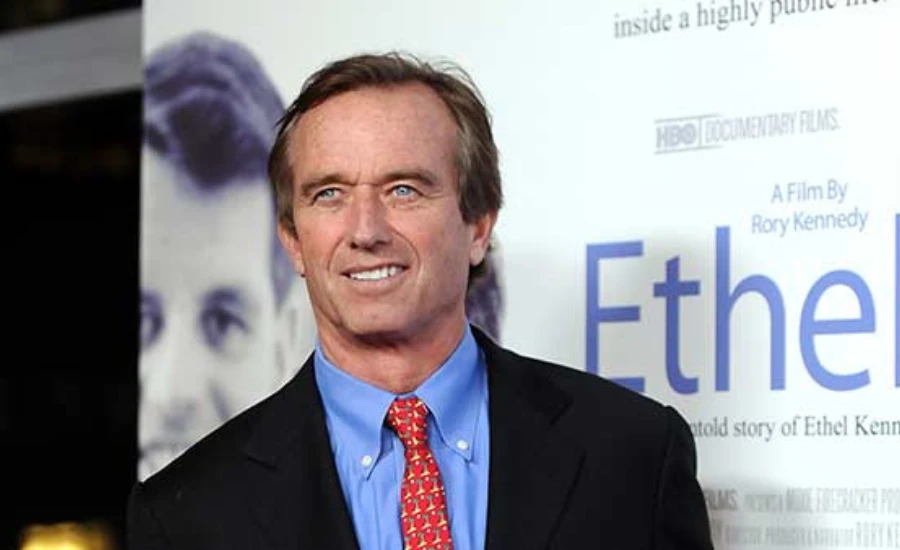
RFK Jr Young and Now: The Kennedy Who Broke Every Rule — Then Got a Cabinet Seat
He was 14 years old when his father’s body came home.
June 1968. Robert F. Kennedy — senator, former attorney general, and the man who might have been president — was shot in a Los Angeles hotel kitchen and died 25 hours later. His third son, named after him, sat in the front pew of St. Patrick’s Cathedral in New York and watched the coffin pass.
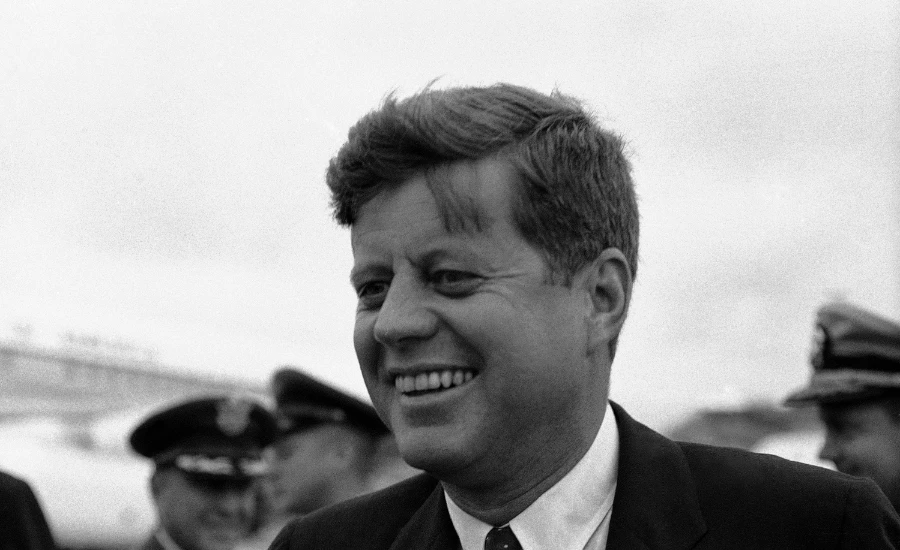
Five years earlier, he had done the same thing for his uncle, President John F. Kennedy. He was nine then.
By the time he was a teenager, Robert F. Kennedy Jr. had buried more political royalty than most Americans see in a lifetime. Then he picked up a needle.
What happened between that funeral pew and the Cabinet room of the United States government is one of the most improbable stories in American political history. It isn’t a redemption arc. It’s more complicated than that.
Bio Table
| Detail | Info |
|---|---|
| Full Name | Robert Francis Kennedy Jr. |
| Known As | RFK Jr.; Bobby Kennedy Jr. |
| Born | January 17, 1954, Georgetown University Hospital, Washington D.C. |
| Father | Senator Robert F. Kennedy (assassinated June 6, 1968) |
| Mother | Ethel Skakel Kennedy |
| Siblings | 10 brothers and sisters — third of eleven children |
| Notable uncles | President John F. Kennedy; Senator Ted Kennedy |
| High schools | Palfrey Street School; two prep schools from which he was expelled |
| College | Harvard University (BA, 1976) |
| Law school | University of Virginia School of Law (JD) |
| Career | Assistant DA Manhattan; environmental lawyer; author; anti-vaccine activist |
| Founded | Waterkeeper Alliance (1999); Children’s Health Defense (2016) |
| Current role | 26th Secretary of Health and Human Services (sworn in February 13, 2025) |
| Drug history | 14-year heroin addiction, 1969–1983; arrested South Dakota 1983; claims 40+ years sobriety |
| Marriages | Emily Ruth Black (1982–1994); Mary Richardson Kennedy (1994–2012, died by suicide); Cheryl Hines (2014–present) |
| Children | Six — two with Black (Bobby III, Kathleen “Kick”); four with Richardson (Conor, Kyra, Finn, Aidan) |
| Voice condition | Spasmodic dysphonia — causes his distinctive strained voice |
| Age (2025) | 71 years old |
The Young RFK Jr.: What the Photos Don’t Show
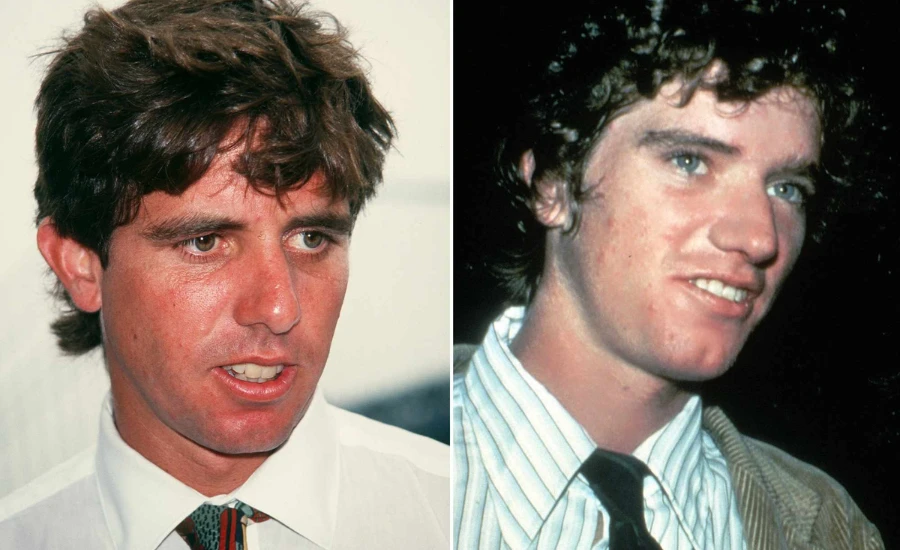
Archival images of young Bobby Kennedy Jr. show a kid with long shaggy hair, an easy smile, and the kind of physical ease that comes with growing up on estates in Hyannis Port and McLean, Virginia.
The photos don’t show what was happening inside.
His father was assassinated on June 5, 1968. Bobby Jr. was 14. His mother Ethel had ten other children and was pregnant with an eleventh at the time of the shooting. The family was enormous, Catholic, and built on the idea that grief was something you pushed through, not something you sat with.
Bobby Jr. did not push through. He fell apart — slowly, then all at once.
His drug use began as a teenager. Multiple sources confirm he was suspended from not one but two prep school boarding schools for drug-related behavior. His mother Ethel repeatedly ordered him to leave the family home. By his own admission, his “addiction came on full force” by the summer after his father’s death.
“By the end of the summer, I was shooting heroin, which was my drug of choice until I was 28 years old,” he has said publicly.
He was a teenager with a needle in his arm and one of the most famous last names in America.
Harvard, Falconry, and Cocaine
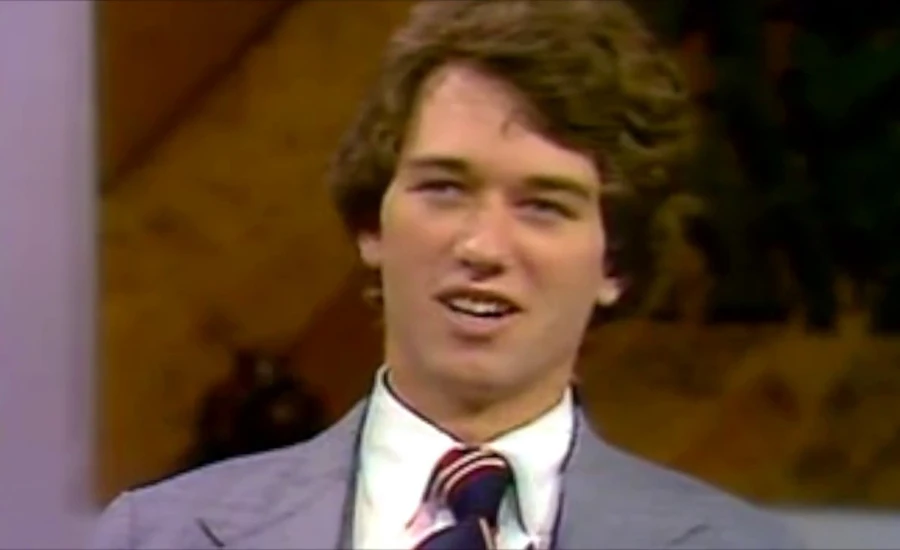
He graduated from Harvard University in 1976. He studied political science and history.
What else happened at Harvard is considerably more documented than most university careers.
According to multiple sources, including reporting in The Bulwark and a biography by New York Post investigative journalist Isabel Vincent, Kennedy sold cocaine out of his dorm room at Harvard. This is alleged in reporting and in sourced accounts — it has not been litigated or denied in detail by Kennedy publicly.
One thing he has never denied: he introduced Lem Billings — a family friend who had been close to President John F. Kennedy and stepped in as a surrogate father figure for Bobby Jr. after the assassination — to heroin. Billings was apparently addicted to heroin when he died of a heart attack in 1981. He was 65 years old.
The writer David Horowitz, whose family knew the Kennedys, made a more disturbing allegation: that Bobby Jr. held down his younger brother David and injected him with heroin when David was 13 years old. David Kennedy died of a drug overdose in 1984, at age 28. RFK Jr. has never directly addressed the specific Horowitz allegation in any confirmed public statement this reporter found.
Bobby Jr. also has a genuine, lifelong passion for falconry that began in childhood. He has raised hawks and kept raptors throughout his life. He appeared in a wildlife TV special handling an Augur hawk. The falconry is real. So is everything else.
The 1983 Arrest: When It Stopped (Or Did It?)
In September 1983, RFK Jr. was arrested in Rapid City, South Dakota, for heroin possession. He was 29 years old.
He has said this was the moment that forced him into recovery. He began attending Alcoholics Anonymous and, by his own account, has attended eight AA meetings per week ever since. He has spoken openly about his addiction at campaign stops, HHS hearings, and in public speeches.
He also, by his own description, has used psychedelics.
A journalist who profiled Kennedy for a 2025 book reportedly found diary entries and first-hand accounts indicating Kennedy continued to use DMT — a powerful short-acting psychedelic — recreationally in more recent years. Kennedy’s own 1999–2001 diaries, obtained by journalist Isabel Vincent through a source close to the family, reportedly document his inner life during that period in detail.
Kennedy has not publicly confirmed or denied the DMT allegations specifically. He has maintained that he has been sober from heroin and alcohol since 1983. The question of whether sobriety includes psychedelics is a definitional one he has not been pressed on publicly in any confirmed interview found in research.
The man who now runs the U.S. Department of Health and Human Services — the agency that oversees addiction treatment policy for 330 million Americans — has a 14-year heroin addiction in his past. He tells that story himself, often. What he does with it as policy is a different question, and not a resolved one.
Career Part One: The Environmentalist They Actually Respected
Before anti-vaccine activism, before independent presidential runs, before Donald Trump — there was a lawyer who actually knew what he was doing.
After Harvard, Kennedy attended the University of Virginia School of Law. He worked as an assistant district attorney in Manhattan in the early 1980s. Then, in the mid-1980s, he joined two environmental nonprofits: Riverkeeper and the Natural Resources Defense Council (NRDC).
In 1986, he became an adjunct professor of environmental law at Pace University School of Law. In 1987, he founded Pace’s Environmental Litigation Clinic. In 1999, he founded the Waterkeeper Alliance — a nonprofit focused on clean water protection that now has affiliates across multiple countries.
This is real, documented, peer-respected environmental law work. It is not contested the way his later career is. Scientists and lawyers who worked with him during this period describe him as genuinely effective. He brought and won cases protecting waterways. He understood environmental law well enough to teach it.
He is also, as of 2025, the man who fired tens of thousands of HHS employees, slashed $500 million in mRNA vaccine research contracts, and praised a Texas doctor as an “extraordinary healer” using unverified measles treatments — the same week that doctor knew he was infected with measles and met with children and parents in his clinic without a mask.
Both of these men are the same person. That is the central fact of RFK Jr.’s career.
Anti-Vaccine Activism: What He Said and What the Science Says
In 2016, Kennedy founded Children’s Health Defense. It became one of the primary organizations spreading vaccine skepticism across the United States.
Children’s Health Defense has claimed that vaccines cause autism. This claim is false. It has been studied repeatedly across large populations in multiple countries. The original study that suggested a link — by British researcher Andrew Wakefield — was retracted after it was found to be fraudulent. Wakefield lost his medical license.
Kennedy focused specifically on thimerosal, a mercury-based preservative used in some vaccines. His argument: thimerosal causes autism. The scientific response: thimerosal was removed from all childhood vaccines except a few flu and hepatitis versions by 2001, and autism rates continued to rise after removal — disproving the causal claim.
More than 75 Nobel Laureates wrote to the Senate urging opposition to his HHS nomination, saying he would “put the public’s health in jeopardy.” Over 17,000 physicians signed an open letter against his confirmation.
His own family members are on record calling his work “dangerous misinformation.”
He was confirmed anyway, in February 2025, by a 52-48 Senate vote. The deciding vote came from Senator Bill Cassidy — a physician — who said he had received “serious commitments” from the Trump administration in exchange for his support.
During his first months as HHS secretary, Kennedy’s FDA vaccine program chief Peter Marks resigned. In a resignation letter, Marks wrote that Kennedy sought “subservient confirmation of his misinformation and lies” rather than truth. The CDC head of communications also resigned, saying Kennedy’s team was “working to bend science to fit their own narratives.”
Three Marriages and What They Reveal
Emily Ruth Black (1982–1994) They met at the University of Virginia law school. Married April 3, 1982, in her hometown of Bloomington, Indiana. Had two children: Bobby Kennedy III and Kathleen “Kick” Kennedy. Emily Black became a public defender with the Legal Aid Society in New York. She has never spoken publicly about the marriage or the divorce. Biographical accounts say infidelity on Kennedy’s part strained and ended the marriage. He reportedly proposed to his second wife while still technically married to Emily.
Mary Richardson Kennedy (1994–2012) He married Mary Richardson three weeks after finalizing the divorce from Emily. She was six months pregnant with their son Conor at the time of the wedding. Together they had four children: Conor, Kyra, William “Finn,” and Aidan. Mary was an interior designer and co-founded the Food Allergy Initiative.
Kennedy filed for divorce in 2010. The divorce proceedings were ongoing in May 2012 when Mary died by suicide at their home in Bedford, New York. She was 52 years old.
What happened around that death is documented and disturbing. Kennedy secretly recorded over 60 conversations with Mary during their divorce proceedings, reportedly in violation of California’s two-party consent recording laws. Mary had reportedly discovered a personal journal — sometimes described as his AA “fifth step” — in which Kennedy had documented affairs with 37 women. During divorce proceedings, Kennedy filed a 60-page affidavit accusing Mary of drinking, violence, and suicidal threats. Mary drafted — but never filed — a rebuttal accusing Kennedy of waging a “scorched earth” campaign, calling him a “sexual deviant” and alleging physical abuse.
In a 2023 interview on VladTV, Kennedy said of Mary: “People who are strong emotionally, no matter what other people do to them or other people’s behaviors, they don’t take their own lives.”
He said this about a woman who died by suicide during divorce proceedings that he had initiated.
Cheryl Hines (2014–present) Kennedy met actress Cheryl Hines — best known as Larry David’s on-screen wife in Curb Your Enthusiasm — through Larry David himself, in December 2011. They married August 2, 2014, at the Kennedy Compound in Hyannis Port.
In 2024, journalist Olivia Nuzzi alleged a “digital” sexting affair with Kennedy. Kennedy denied it. Nuzzi was suspended and then fired by New York magazine, which stated she had a personal relationship with “a former subject relevant to the 2024 campaign.” According to reporting in Vincent’s biography, the marriage nearly collapsed during this period. Kennedy reportedly feared another public divorce would damage his political standing with Trump’s base. Hines stayed. Publicly, she has described it as resolved. “I would never want to hurt Bobby. I love him,” she told The Hollywood Reporter.
The Family That Publicly Opposes Him
The Kennedy name is the foundation of his entire public identity. It is also being used against him by the people who bear it.
On January 28, 2025, Caroline Kennedy — daughter of President John F. Kennedy, former U.S. ambassador — sent a video letter to every U.S. senator urging them to vote against RFK Jr.’s confirmation. She called him a “predator” and a “hypocrite.” She accused him of animal cruelty. She accused him of “encouraging” other family members into drug use that led to addiction and death — naming his brother David Kennedy specifically.
His cousin Stephen Smith Jr. publicly supported Caroline’s position.
When Kennedy ran for president as an independent in 2023, his siblings issued a joint statement: “We denounce his candidacy and believe it to be perilous for our country.”
His cousin Caroline’s letter said plainly: he is unqualified in terms of both experience and character.
He has the most famous last name in American liberal politics. His family uses that name to campaign against him.
The Worm in His Brain
In 2012, during divorce proceedings, Kennedy submitted a deposition in which he revealed that a parasitic worm had gotten into his brain and eaten a portion of it before dying.
The condition — neurocysticercosis — is caused by the larva of the pork tapeworm Taenia solium. The larva can migrate to the brain, form cysts, and die there. Kennedy described experiencing memory loss and mental fogginess during this period and attributed it partly to the parasite.
This was in a deposition, not a press release. The story surfaced publicly only when the New York Times published details of the court filing in 2024. Kennedy’s response: he said the worm was dead, the fog had cleared, and that he was in better cognitive shape than either of his political opponents at the time.
Whether this is true, partially true, or medically complicated is unknown. No independent neurological assessment of Kennedy has been made public.
What He Is Doing Now (2025–2026)
Robert F. Kennedy Jr. is 71 years old and serves as the 26th Secretary of Health and Human Services under President Donald Trump. He was sworn in on February 13, 2025.
His confirmed actions as HHS secretary as of April 2026:
- Fired tens of thousands of employees across HHS, including NIH, FDA, and CDC staff
- Slashed $500 million in contracts for mRNA vaccine development research
- Told FDA vaccine chief Peter Marks to resign or be fired (Marks chose to resign)
- Launched the MAHA Commission (Make America Healthy Again), which released a report on childhood chronic disease in May 2025
- Announced a $100 million STREETS Initiative for opioid addiction treatment in early 2026
- Praised an unmasked, measles-infected Texas doctor as an “extraordinary healer”
- Joined Meta Platforms’ board of directors (though this may be conflated with Dana White — this requires verification: Meta elected Dana White to its board in 2025, not RFK Jr.)
- Continued his “wellness farm” vision for addiction treatment, which drug policy experts say ignores evidence-based medication treatments like buprenorphine and methadone
He still attends eight AA meetings per week, by his own account.
What Is Actually Unclear
Every honest account must flag gaps:
- The DMT allegation: reported by a journalist with sourced accounts; denied indirectly by Kennedy’s camp; not confirmed in primary documents
- The “Bobby held David down and injected him with heroin” allegation: from writer David Horowitz; not confirmed independently; not addressed directly by Kennedy in any primary source found
- The worm’s current status: Kennedy says the parasite is dead; no public neurological assessment available
- His exact net worth: Estimates range from $1.5 million to $7 million — he is significantly less wealthy than other Kennedys; his 10% fee arrangement with law firm Wisner Baum was disclosed to HHS ethics officials
- Whether his psychedelic use constitutes a violation of his stated sobriety: no confirmed primary statement from Kennedy directly addressing this
Final Word: The Boy at the Funeral Became the Most Controversial Kennedy Since His Father
He lost two men to assassination before he was 15. He picked up a needle. He put it down. He built a real legal career. Then he burned much of it down chasing different fights.
That’s the accurate arc. It’s not a simple one.
He is genuinely feared by the public health community. He is genuinely admired by millions of Americans who distrust pharmaceutical companies. He has done real environmental law work that helped real rivers. He has spread vaccine misinformation that real doctors say will cost real lives.
He recorded his wife’s phone calls without consent during her divorce. He said the woman who died by suicide during those proceedings “wasn’t strong enough.” He named his daughter after himself and his daughter “Kick” — the same nickname his aunt Kathleen Kennedy had before she died in a plane crash in 1948.
The Kennedys have always carried their dead with them in the names of their children. Bobby Jr. carries more of those names than almost anyone.
At 71, he is the one Kennedy who managed to stay publicly visible for six decades — through addiction, through three marriages, through exile from his own family, through a losing presidential campaign, through a Cabinet appointment that his own cousin went on camera to oppose.
Whether what he is doing now helps or harms the country is not a settled question. The scientists have their answer. His supporters have theirs. Both sets of people are paying attention.
The boy in the funeral photo is still making news. That’s something, even if it’s hard to say exactly what.
You may also like Angie Gutierrez
FAQ: 12 Real Questions About RFK Jr. Young and Now
1. How old is RFK Jr. now?
Robert F. Kennedy Jr. was born on January 17, 1954. He is 71 years old as of 2025. He was sworn in as Secretary of Health and Human Services on February 13, 2025.
2. What did RFK Jr. look like when he was young?
Archival photos from the 1960s and 1970s show him as a lean, long-haired young man with a resemblance to his father. He grew up at the Kennedy Compound in Hyannis Port, Massachusetts, and Hickory Hill in McLean, Virginia. Early photos often show him outdoors, sometimes with hawks and falconry equipment, reflecting a lifelong passion for wildlife.
3. How did RFK Jr.’s father’s assassination affect him?
Robert F. Kennedy was assassinated on June 5, 1968, when Bobby Jr. was 14. He had also witnessed his uncle President John F. Kennedy’s assassination at age nine in 1963. By his own account, his drug addiction began directly in the aftermath of his father’s death. He has said he was shooting heroin by the end of the summer following the assassination.
4. Did RFK Jr. really struggle with heroin addiction?
Yes. He has confirmed this publicly, repeatedly, including during Senate confirmation hearings for HHS secretary. He describes a 14-year heroin addiction beginning in his early teens. He was arrested for heroin possession in South Dakota in September 1983 at age 29. He says he has been in recovery since that arrest and attends eight AA meetings per week.
5. Why does RFK Jr. have a strange voice?
He has spasmodic dysphonia, a neurological condition that causes involuntary spasms of the vocal cords. It produces his distinctive strained, strangled vocal quality. It is not related to drug use. The condition is chronic and has no cure, though some treatments can reduce symptoms.
6. Was RFK Jr. expelled from boarding school?
Yes. He was suspended or expelled from two of the three prep schools he attended during his high school years due to drug-related behavior. His mother Ethel reportedly ordered him to leave the family home on more than one occasion.
7. Who were RFK Jr.’s wives?
Three marriages. Emily Ruth Black (married 1982, divorced 1994) — two children. Mary Richardson Kennedy (married 1994, filed for divorce 2010, died by suicide May 2012) — four children. Cheryl Hines, actress best known from Curb Your Enthusiasm (married August 2014, still married as of 2026) — no children together.
8. How did Mary Richardson Kennedy die?
She died by suicide in May 2012 at their home in Bedford, New York. She and Kennedy were in the middle of contentious divorce proceedings at the time. She had reportedly discovered Kennedy’s personal journal documenting affairs with 37 women. Kennedy had filed a 60-page affidavit making serious accusations against her. She drafted but never filed a rebuttal accusing him of abuse and calling him a “sexual deviant.”
9. What is RFK Jr.’s role in the government now?
He serves as the 26th Secretary of Health and Human Services, confirmed by the Senate in February 2025 by a 52-48 vote. He oversees the FDA, CDC, NIH, and SAMHSA, among other agencies. His tenure has included mass firings of agency staff, cuts to vaccine research funding, and policy conflicts with career scientists.
10. Why does RFK Jr.’s own family oppose him?
Caroline Kennedy — daughter of President JFK and his cousin — sent a video letter to U.S. senators in January 2025 urging them to vote against confirming him. She called him a “predator” and “hypocrite,” accused him of animal cruelty, and blamed him for influencing family members toward drug use. His siblings issued a joint statement opposing his 2024 independent presidential campaign. Multiple cousins have publicly distanced themselves from his political positions.
11. What is the “worm in his brain” story?
During 2012 divorce proceedings, Kennedy disclosed in a deposition that a parasitic worm — the larva of the pork tapeworm — had entered his brain, eaten a portion, and died. The condition is called neurocysticercosis. The story became public when the New York Times reported details from the court filing in 2024. Kennedy said the parasite was dead and he had recovered. No independent public neurological assessment has been released.
12. What anti-vaccine positions has RFK Jr. taken?
He founded Children’s Health Defense in 2016, which has claimed vaccines cause autism — a claim that is scientifically false and based on a fraudulent, retracted study. He specifically targeted thimerosal, a mercury-based preservative removed from childhood vaccines in 2001. Autism rates did not decline after removal. More than 75 Nobel Laureates and over 17,000 physicians publicly opposed his HHS nomination on the grounds that he spreads medical misinformation. His FDA vaccine chief resigned during his tenure, writing that Kennedy sought “subservient confirmation of his misinformation.”